Can You Put a Dog Door in a Rental Home?
A removable sliding glass panel is a practical dog door for renters when the landlord approves the installation. Choose one that fits your track and dog, leaves enough room for people, and lets the main door lock.
On this page (10 sections)
- Can you put a dog door in a rental home?
- Which dog door for renters should you choose?
- What should you ask your landlord before installing one?
- How do you measure the doorway and your dog?
- How do you set up a removable dog door?
- How can you protect security and weather seals?
- How do you help your dog use it and keep it clean?
- What mistakes should renters avoid?
- What should you agree on before moving out?
- Which dog door for renters is worth choosing?
A removable sliding glass panel is a practical dog door for renters when the landlord approves it and the doorway fits. It gives your dog a passage without cutting a flap into the rental's door or wall.
The right panel must fit both your dog and your home. Check the track height, pet opening, space left for people, and locking arrangement before you buy.
Can you put a dog door in a rental home?
You can install a dog door when your lease and landlord allow the specific setup. Ask before ordering, even if the panel is described as temporary or renter-friendly.
A sliding panel sits beside the existing human door and occupies part of its track. That changes the doorway's usable width and may require a different way to secure the sliding door.
Get approval for the panel, attachment method, seals, and locks. If permission is denied, use supervised outdoor breaks rather than changing a door or wall.
Which dog door for renters should you choose?
Choose PetSafe for a larger dog and included access controls, VEVOR for a smaller pet and tool-free placement, or the Adjustable Aluminum panel only after resolving its drill requirement. All 3 options need a compatible sliding glass doorway.
PetSafe dog door for renters with larger dogs
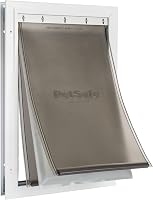
The PetSafe Large suits medium-to-large dogs up to 100 lb, provided they fit its 10 1/4 x 16 3/8 in flap. The 4 1/4 in step-over also matters for short-legged dogs or pets that struggle with raised thresholds.
Its track height range is 75 7/8 to 80 11/16 in, and the panel takes 13 1/2 in from the human passage. Mark that width across your doorway before buying to judge whether people can still pass comfortably.
The assembled panel has an aluminum frame, tempered glass, a magnetic flap, a closing panel, and a latch kit for the sliding door. Choose it if you want those controls together; skip it if the remaining passage is too narrow or your dog cannot comfortably clear the step-over.
VEVOR for smaller dogs and cats
The VEVOR Medium suits a smaller dog or cat that fits an 8 1/4 x 12 1/4 in flap. Its adjustable height matches the PetSafe range, while its aluminum frame and tempered glass form the panel structure.
VEVOR describes placement in the patio track as tool-free, which makes it worth considering when your landlord wants to avoid drilled attachments. Its metal cover and locking feature let you control pet access.
Skip this size if your dog must squeeze or crouch sharply to pass. Also confirm how the main sliding door will lock, since controlling the pet opening and securing the human door are separate jobs.
Adjustable Aluminum panel for an approved tool-assisted setup
This white aluminum panel suits dogs up to 75 lb that fit its 10 1/5 x 16 1/2 in opening. It adjusts from 75 3/5 to 80 in, so it may suit a track slightly shorter than the other 2 panels can accommodate.
Installation calls for a screwdriver and electric drill. Before choosing it, establish where the drill is used and whether that step meets your landlord's conditions.
Its magnetic closure helps the flap return to place, but it isn't a security lock. Skip this option if drilled attachments are prohibited and you cannot confirm an approved installation method.
For a wider comparison, see our guide to dog doors for sliding glass doors.
What should you ask your landlord before installing one?
Ask for written approval of the exact panel and installation method, including any changes to locks or seals. A general okay for a pet door leaves too much room for disagreement later.
Send the model name and installation instructions, then clarify:
- Which screws, brackets, or adhesive seals are allowed?
- How must the sliding door remain secured?
- Must the panel come out when you move?
- Who handles damage or restoration?
- Are there restrictions on patio or shared outdoor access?
Take clear photos of the track, frame, glass, and existing hardware before starting. Keep the approval and photos with your lease records.
How do you measure the doorway and your dog?
Measure the track, remaining human passage, and your dog separately. A panel can fit the home while its flap is wrong for the pet.
Measure the height where the panel will actually sit, following its installation instructions. Check the track shape and depth too; a matching height range alone doesn't confirm that every part will fit.
Next, mark the panel's width in the open doorway. Walk through that reduced space while carrying groceries, and consider anyone who uses a mobility aid.
Measure your dog's chest width and shoulder height while they're standing naturally. Use our dog door size chart to plan a comfortable opening rather than choosing from weight alone.
Check the step-over and the landing on both sides. A dog needs room to approach straight, clear the threshold, and place its feet safely outside.
How do you set up a removable dog door?
Start with a clean track and the approved instructions, then check fit, locks, and seals before letting your dog through. Don't force a panel into place or improvise attachments to fix a poor fit.
Remove loose dirt from the track and check that the existing sliding door moves normally. Photograph or label any hardware you remove, and store it together.
Position and secure the panel in the order its instructions require. Fit only the approved weather seals and locking hardware, keeping door drainage paths clear.
Open and close the human door several times, then check its lock from inside. Inspect the panel edges for movement and visible gaps before introducing your pet.
Our sliding glass dog door installation guide explains the setup process in more detail.
How can you protect security and weather seals?
Check the main door lock and pet access control separately each time you secure the entry. A flap that closes magnetically doesn't prevent a person or animal from pushing through it.
Use a closing panel or lock as directed when pet access should stop. For more on these controls, read our guide to dog door security, locks, covers, and panels.
Weather-resistant materials don't make every installation draft-free. Check the panel edges and flap for gaps, especially after strong wind or a change in how the door closes.
A dog door should lead only to a suitable outdoor area. Check fences, gates, and shared-space rules before allowing independent access; our guide to whether dog doors are safe covers broader risks.
How do you help your dog use it and keep it clean?
Introduce the flap slowly and under supervision, then keep the track and closure clear. Don't assume a dog that fits the opening will use it right away.
Let your dog inspect the passage, then encourage short trips through with praise or a treat. Never push a reluctant dog through or leave it outside to force the return trip.
Wipe dirt from the flap and frame using the care instructions for the panel. Remove hair and grit from the lower track so the door can move and close properly.
Check for loose parts, a flap that catches, or a closing panel that no longer seats fully. Stop pet access until any fault affecting fit or closure is resolved.
What mistakes should renters avoid?
The most costly mistakes are buying before approval, choosing by weight alone, and overlooking the human door. Check all 3 before committing to a panel.
Don't assume “no cutting” means no screws, adhesive, or changes to locking hardware. Read the full installation steps rather than relying on a short description.
Don't accept a cramped passage just because the panel fits the track. Your household still needs a practical doorway for daily use.
If your rental lacks a sliding glass door, these panels won't solve the problem. Our dog doors for exterior doors guide covers another route, but cutting requires explicit approval; dog door types and sizes can help you compare the broader options.
What should you agree on before moving out?
Agree whether the panel stays or comes out, and what restoration is required. Set those terms before installation so removal doesn't become a last-minute dispute.
Keep the original hardware and the panel's instructions throughout the tenancy. After removal, photograph the doorway and confirm that the sliding door closes and locks correctly.
Which dog door for renters is worth choosing?
Choose the PetSafe Large if your larger dog fits, the step-over works, and you have room for its panel width. Choose the VEVOR Medium for a smaller pet when tool-free placement matches your approved setup.
Consider the Adjustable Aluminum panel when its height range suits your track and the drill requirement is acceptable. Reject any panel that leaves you with an insecure door, poor pet fit, or an awkward human passage.
The best dog door for renters fits the home, the dog, and the written agreement. Once those checks pass, use our sliding glass door dog door guide to compare your final options.
Frequently asked questions
Can I install a dog door in a rental without permission?
Get written landlord approval before installing a dog door in a rental. A removable panel may avoid cutting, but it changes how the doorway closes and locks; ask for approval covering the exact panel, any fasteners, weather seals, and the condition required when you move out.
What is the best dog door option for a renter?
A removable sliding glass panel is a practical first choice if your rental has a suitable patio door. Choose by track height, flap size, step-over height, and remaining space for people; confirm that the main sliding door can lock with the panel installed before allowing your dog to use it.
Can a landlord charge for a dog door?
Any charge depends on your lease, local rental rules, and the agreement you make with your landlord. Ask about installation costs, deposits, damage, and removal before buying; keep the written terms with photos of the doorway so both sides have a record of its starting condition.
Do removable dog doors damage a rental?
A removable panel can avoid cutting, but poor fit, fasteners, or adhesive seals can still affect the doorway. Follow the installation instructions and get approval for each attachment method; never force a panel into the track, and keep the original hardware for restoring the door when you leave.