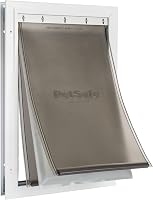
Dog Door Security: Locks, Covers and Panels
Dog door security starts with a compatible closing panel when pet access isn't needed. Choose electronic access control to limit which pets enter, and check whether the opening leaves nearby locks or keys within reach.
On this page (9 sections)
- What does dog door security mean?
- How can you secure a dog door when your pet is inside?
- Can a cover stop someone from reaching through?
- Do electronic dog doors improve access control?
- Does the dog door's location change the security plan?
- How do you choose a replacement panel safely?
- How should you fit, clean and check a closing panel?
- What mistakes weaken a dog door security routine?
- Which dog door security option should you choose?
Dog door security starts with closing the opening when access isn't needed and keeping nearby locks and keys out of reach. A compatible panel handles scheduled closure, while an electronic door may help control which pets enter.
Start with the problem you need to solve: keeping your dog indoors, limiting unwanted animals, or protecting the main entry. Those goals call for different checks, even when the same pet door is involved.
What does dog door security mean?
Dog door security means controlling pet passage and protecting the surrounding entry. Blocking a flap, identifying an allowed pet and resisting forced entry are separate jobs.
A closing panel can stop ordinary pet passage through the opening. A collar-controlled door may admit a pet with the right device, but neither feature alone proves that the assembly can withstand force.
For a broader risk review, read whether dog doors are safe for your home. If wildlife or neighborhood pets are the concern, see whether dog doors let other animals in.
How can you secure a dog door when your pet is inside?
Use a matching closing panel or the door's built-in closure, following its instructions. Confirm that the panel covers the opening and engages fully before relying on it to keep your pet indoors.
The 2 PetSafe covers below suit different door families. Choose by the installed door's identity, not by your dog's weight or the word medium or large.
Which PetSafe panel fits a larger opening?
The PetSafe Snap-On Closing Panel, Large suits households with a matching large PetSafe door that needs a removable cover. It fits the PetSafe Plastic Pet Door, Extreme Weather Pet Door and Panel Pet Door Insert families in the compatible size.
Choose it when you want to close a matching opening at set times without replacing the whole pet door. Its plastic construction is washable, which helps when muddy paws leave dirt around the cover.
Skip it for another brand or a different attachment system. A large opening alone isn't enough to confirm fit, and a snap closure shouldn't be treated as proof of a security lock.
When is a medium sliding panel useful for dog door security?
The PetSafe Closing Panel, Medium suits compatible medium Freedom Aluminum, Wall Entry, Sliding Glass and Extreme Weather Sliding Glass pet doors. It slides into place to block the exit.
This rust-proof plastic panel measures 8¾ x 14¼ inches. Choose it if your existing door takes this sliding cover and you can reach the panel path easily during your daily routine.
Skip it if your frame takes a snap-on cover or belongs to another door family. Also check that furniture, trim or blinds won't block the movement needed to insert and remove it.
Can a cover stop someone from reaching through?
A fitted cover blocks an open passage while it stays in place, but don't assume it prevents removal or forced entry. Review what the uncovered opening exposes as well as how the cover attaches.
From outside, check the distance to handles and locks without putting your hand near a moving flap. Keep spare keys and other access devices away from the opening.
If hardware remains reachable, address the layout or entry hardware before treating a replacement panel as the solution. For a new installation, choose only the opening your pet needs; our dog door size chart explains how to measure.
Do electronic dog doors improve access control?
Electronic dog doors can limit entry to pets with a supported credential, making them useful when you want ongoing access for your dog. A plain closing panel requires you to allow or block passage yourself.
Check the exact access modes before choosing a door. An exit-only setting, scheduled closure and pet identification solve different needs, so don't assume every electronic model includes all 3.
Also check what happens during a power interruption or low battery, how you close the opening manually, and whether each household pet needs its own device. Those details matter when several pets share one exit.
Compare options in our guide to choosing a collar, microchip, or app dog door. For the broader tradeoff, read electronic vs. flap dog doors.
Does the dog door's location change the security plan?
Yes, the location determines what the opening exposes and how the main entry closes. A cover is only one part of that setup.
With a sliding-glass insert, confirm that the larger door can be secured in its installed position. With a wall opening, check that you can reach the closure without moving furniture each time.
An awkward closure is easy to leave unused. Before choosing a location, allow room to handle the panel and store it nearby without creating a trip hazard.
For insert-specific considerations, see the PetSafe sliding-glass pet door review. If you're choosing where to cut, compare wall-mounted and door-mounted dog doors.
How do you choose a replacement panel safely?
Match the brand, door family, size and attachment method, then follow the replacement's measuring instructions. A panel's outside dimensions, inner dimensions and the flap opening are different measurements.
Record model markings before ordering, and keep the old panel until its replacement fits. If the old cover is missing, identify the installed door through its markings or instructions rather than guessing from a photo.
Who should choose a Baboni metal panel?
The Baboni Metal Closing Panel, Large suits an existing Baboni large wall pet door. Choose it as a matching replacement, not as a universal metal upgrade.
The aluminum panel measures about 18 x 10.98 inches, and Baboni describes it as rust-proof. Skip it for other brands and other Baboni sizes, even if their openings look similar.
Material doesn't settle the security question on its own. The panel still needs the correct frame and attachment points; don't bend or cut it to make an uncertain fit work.
What should you check on a replacement snap-on cover?
The PetSafe Extreme Weather Snap-On Closing Panel is a Viecam replacement that requires an existing panel marked 700-1099. Its required inner panel size is about 15 inches high x 10.5 inches wide.
Remove the old panel and measure its inner dimensions, not the door frame. This is the choice for someone who can confirm both the marking and the measurement match.
Skip it if either check fails or the original panel can't be identified. The medium size label is too broad to choose this replacement safely, and a mismatch shouldn't be solved by forcing the snap points.
How should you fit, clean and check a closing panel?
Fit the panel with your pet clear of the opening, then confirm it is fully seated according to the instructions. Check the whole edge for gaps, loose points or a panel sitting at an angle.
For a sliding cover, clear dirt from its path before inserting it. For a snap-on cover, align the attachment points first instead of pressing harder when it won't engage.
Clean with methods allowed by the panel maker and dry it before refitting. During routine cleaning, look for cracked plastic, bent edges, worn attachment points or loose frame fasteners that could prevent proper closure.
Store a removed panel where it won't bend or become a chew toy. Keep it close enough to use every day, especially if it's your backup during an electronic door's power interruption.
What mistakes weaken a dog door security routine?
The main mistakes are buying by size name, leaving a cover partly engaged and expecting one feature to solve every risk. Prevent them with a fit check and a clear household routine.
- Don't force a poor fit. Recheck the model and measurements if the panel won't attach as instructed.
- Don't close a pet outside. Confirm where every pet is before covering the opening.
- Don't overlook toilet breaks. Arrange another way out whenever access is blocked.
- Don't assume weather sealing means security. Draft control and resistance to unwanted access require different checks.
Pick a regular closure time, such as bedtime, and make sure everyone knows when the opening is blocked. For pets learning a new access routine, use our guide on training a dog to use a dog door.
If drafts are a separate concern, compare dog doors for cold weather. A cover choice should still start with compatibility.
Which dog door security option should you choose?
Choose a matching replacement panel if your current door works and you mainly need scheduled closure. Use the large PetSafe snap-on or medium PetSafe sliding cover for its compatible door family, and the Baboni panel only for the matching large wall door.
Choose the Viecam replacement only after confirming the old panel's marking and inner measurements. Consider an electronic door when you need selective pet entry while keeping access available.
For dog door security concerns involving reachable locks or forced entry, review the whole entry before buying a cover. If that means changing the installation, start with dog doors explained: types, sizes, and what to buy.
Frequently asked questions
Does a dog door make a home less secure?
A dog door can add an access point, especially if the opening leaves nearby handles, locks or keys within reach. Check its position, secure the main entry independently, and use a compatible closure when pet access isn't needed; a closing panel alone doesn't show how well the opening resists force.
Do dog door covers lock?
Some dog door covers have locks, while others snap on or slide into place to block pet passage. Check the exact door and panel instructions for a locking feature before buying, and don't assume that a snug fit, metal construction or the word closing means a keyed lock is included.
Can someone reach through a dog door?
Someone may be able to reach through a dog door if the opening is large enough and nearby hardware is within reach. Check the layout from outside, move keys away from the opening, and review the door's placement if a handle or lock could still be reached through it.
Are electronic dog doors more secure?
Electronic dog doors can offer better control over which pets enter when they require a matching collar or supported credential. That access control doesn't prove resistance to forced entry, so check the activation method, power-loss behavior and backup closure alongside the main entry's locks before choosing a door.