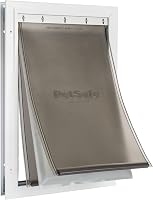
How to Replace a Dog Door Flap
Choose a dog door replacement flap that matches your door model, opening, and mounting points. Use the PetSafe option for a compatible medium PetSafe door or cut-to-fit PVC for a frame that accepts a strip curtain.
On this page (6 sections)
Choose a dog door replacement flap that matches your existing frame, then fit it so it swings freely and returns to its closing position. A shaped replacement suits a matching branded door; cut-to-fit PVC suits a frame built to hold a curtain.
Replace the flap alone when the frame is sound and the opening still fits your dog. If the frame is cracked, bent, or too small, new flap material won't solve the underlying problem.
How do you choose a dog door replacement flap?
Match the door model and attachment system first, then check the measurements. “Medium” or “large” describes a size within a product range, not a shared standard across brands.
Find the brand and model on the frame or in the original paperwork. Check which flap size belongs to that exact door before removing anything.
Record these details:
- The old flap's full width and height, including the mounting area.
- The clear opening your dog walks through.
- The number of mounting holes and the distance between them.
- The top clamp, track, screws, or other parts holding the flap.
- Any shaped edges or closing parts that must meet the frame.
Photograph the attachment before taking it apart. Keep the old flap as a pattern until the replacement is installed.
Our dog door size chart helps you check whether the opening still suits your pet. For a broader look at flap, panel, and powered designs, see dog doors explained.
Which model-specific dog door replacement flap should you choose?
Choose the PetSafe Freedom Replacement Flap, Medium if your existing medium PetSafe door is compatible. It's the straightforward choice when you want to retain the original mounting and closing arrangement.
It fits PetSafe Extreme Weather, Wall Entry, Sliding Glass, Freedom Patio Panel, Freedom Aluminum, and Plastic Pet Doors in the matching size. Its opening measures 8 1/8 x 12 7/8 in, with 4 top holes for adjustment.
PetSafe describes the flap as weather-resistant, and replacement needs only a screwdriver. Position it using the door's instructions so the lower edge meets the frame without dragging.
Skip this option for an unidentified frame or a different brand unless compatibility is confirmed. Don't cut it to force a fit, since changing its edges can prevent proper closure.
Who should choose the wider MEWTOGO PVC material?
Choose MEWTOGO for a custom curtain when your dog house or suitable frame needs wider material. It's useful for a DIY opening where you can plan the cuts and secure the top edge yourself.
The transparent light blue PVC measures 15.7 in wide by 4.9 ft long. Installation calls for cutting it to shape, drilling 2 to 3 holes, and screwing it above the opening.
MEWTOGO recommends overlapping strips to reduce gaps. Sketch your layout first so the overlap doesn't leave you short of material at the far edge.
Skip it if you need a ready-shaped flap that drops into fixed mounting holes. If the material arrives curled or has an odor, MEWTOGO recommends pressing it flat in a ventilated place before use.
Who should choose the narrower Uross PVC material?
Choose Uross for several narrower curtain strips when the mounting surface can accept nails. Its longer length gives you material to divide into pieces, but each piece must still cover the required height.
The PVC measures 7.9 in wide by 5.9 ft long, and stainless steel nails are included for attachment. A broad opening needs several overlapping strips rather than one full-width piece.
Uross recommends flattening the rolled material and exposing it to sunlight for a few days before use if it has an odor. Allow for that preparation before removing a usable old curtain.
Skip it if you need one wide flap or your frame can't accept nail attachment. Included nails aren't a reason to drive fasteners into an unsuitable plastic or metal frame.
How do you prepare and remove the old flap?
Keep the frame stable and save its hardware while removing the worn flap. Arrange the replacement and tools first so the doorway stays open for as little time as possible.
Keep your dog away from the work area. Set out a container for small parts and note which adjustment holes the old flap uses.
Support the flap as you loosen its clamp or fasteners. Remove only the parts needed for flap access, following the door instructions.
Clean dirt from the mounting area and inspect it for cracks or stripped screw holes. Stop if the frame can't hold the replacement securely; tightening harder can make that damage worse.
How do you install the replacement without gaps?
Hang the flap square and secure it evenly, leaving room for free movement. Align everything before fully tightening the attachment.
For a shaped flap, match the holes and direction to the original arrangement. Tighten gradually across the mounting area so one side doesn't pull higher than the other.
For PVC material, measure the opening plus the top attachment area before cutting. Mark every piece and any overlap first, then check the layout against the frame.
Don't stretch the material while fastening it. Make sure nail points, screw ends, and cut edges can't catch your dog's coat or skin.
Our guide to how to install a dog door covers the frame itself. Use the instructions for your particular door when replacing only its flap.
How should you check movement and introduce your dog?
Move the flap both ways by hand and let it settle after each pass. It should return without catching the sides, dragging along the bottom, or hanging at an angle.
Check that the locking cover or panel still fits, if your door has one. Sweep up offcuts and collect every loose fastener before allowing access.
Let your dog approach at its own pace. A new flap may feel different, so use the steps in how to train a dog to use a dog door if your pet hesitates.
What mistakes cause drafts and poor closure?
Wrong sizing, uneven mounting, and rushed cutting cause many flap problems. Correct the fit before adding extra material or tightening more screws.
Avoid these common mistakes:
- Buying by pet size alone. The flap must match the frame as well as your dog.
- Confusing opening size with flap size. The mounting area can extend beyond the clear opening.
- Cutting before flattening rolled PVC. Curling makes it harder to judge how the finished curtain will hang.
- Overtightening the top attachment. A bent clamp or distorted frame can restrict movement.
- Leaving gaps between curtain strips. Plan overlap across the whole opening.
- Expecting a new flap to fix frame damage. Inspect the surrounding door before ordering.
If air or rain still gets through, check the frame seals and the joint between the pet door and the main door or wall. A sound flap can't close gaps elsewhere in the installation.
For winter comfort, read about insulated dog doors. A replacement flap restores one part of the barrier; the rest of the door still needs to close and seal properly.
How do you care for the new flap?
Remove dirt gently and check the closing edges regularly. Use the material's care instructions, and avoid harsh solvents or abrasive pads that could damage its surface.
Wipe away mud, grit, and hair around the frame and attachment area. After cleaning, move the flap both ways and make sure nothing sticks.
Check for loose hardware after heavy use or strong wind. Replace material that tears near its mounting points, since that damage can spread as your dog pushes through.
If the frame is also failing, compare plastic and aluminum dog doors before spending more effort on flap repairs.
Which dog door replacement flap should you buy?
Choose PetSafe for a confirmed matching medium PetSafe door, MEWTOGO for wider custom curtain material, or Uross for several narrower strips on a suitable mounting surface. Choose by attachment and coverage before comparing other features.
Keep a sound frame and replace only the worn flap. If the opening has become too small for your dog, use the dog door size chart before buying another dog door replacement flap.
Frequently asked questions
How do I know which replacement dog door flap to buy?
Match the door model, flap shape, opening, and mounting points before buying; measure the old flap and the frame separately, including the spacing between holes. A size label such as medium isn't enough because different door designs can use different attachment patterns and closing edges.
Can I cut a dog door replacement flap to size?
Cut only material designed for trimming, such as the MEWTOGO and Uross PVC options; keep enough material above the opening for secure attachment, and plan any strip overlap before cutting. A shaped replacement with fixed mounting holes or a magnetic closing edge should keep its original dimensions.
What tools do I need to replace a dog door flap?
The compatible PetSafe replacement needs a screwdriver; MEWTOGO calls for cutting the PVC, drilling 2 to 3 holes, and securing it with screws, while Uross includes stainless steel nails. Have a measuring tape and suitable cutting tools ready for custom work, and follow the instructions for your frame.
Why won't my new dog door flap close?
Check for rubbing, uneven mounting, trapped dirt, and a mismatch between the flap and frame; loosen and adjust the attachment only as the door instructions allow, then move the flap both ways. If it still hangs open, inspect the frame for damage before trimming or adding more fasteners.