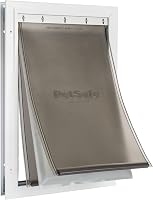
Do Insulated Dog Doors Work in Winter?
An insulated dog door can reduce winter drafts, especially when its flaps close fully and its frame is sealed well. Choose by your dog's measurements, entry thickness, and wind exposure, then use the closing panel when pet access is not needed.
On this page (8 sections)
- How does an insulated dog door work in winter?
- Which door-mounted models suit winter access?
- Which insulated dog door works through an exterior wall?
- What if you need a thinner door-mounted option?
- How should you measure before buying?
- How do you prevent drafts during setup?
- What care keeps the flaps closing in winter?
- Which insulated dog door should you choose?
An insulated dog door can reduce winter drafts when its flaps close fully and its frame fits without gaps. Choose the right opening for your dog first, then match the unit to your door or wall thickness.
Extra flap layers help, but installation and daily use decide how much benefit you get. A flap caught open by dirt or a poorly sealed frame gives cold air a direct path inside.
How does an insulated dog door work in winter?
An insulated dog door limits air movement and heat transfer through the pet passage. It still creates an opening in your home's exterior, so expect better draft control rather than the seal of a solid door.
Multiple flaps place barriers between indoor and outdoor air. An insulated center layer helps resist heat transfer, while magnetic closures help the outer flaps return to their resting position.
Wind exposure matters, too. If you can choose the location, favor a sheltered entry where your dog has a safe, clear route outside.
For a broader look at styles and entry types, read dog doors explained. Compare more winter options in our cold-weather dog door guide.
Does an insulated dog door's magnetic seal stop all cold air?
A magnetic seal helps hold the flap closed, but it does not make the passage airtight. Dirt along the contact edge, a bent flap, or wind pressure can leave a gap.
Watch the door after your dog passes in both directions. Every flap should return without catching on another layer or the frame.
Which door-mounted models suit winter access?
Choose the PetSafe aluminum model for frequent use by several pets, or the plastic model when a paintable frame and its thickness range fit your entry. Both use three flaps, so frame material alone should not decide the purchase.
PetSafe aluminum: for multi-pet households
The PetSafe Extreme Weather Aluminum Dog Door, Large has adjustable, flexible flaps with a magnetic seal. Its metal frame has reinforced aluminum corners, and PetSafe designs it for multi-pet households.
It fits most paneled, wood, PVC, and metal exterior doors 1.5–2 in thick. Choose it if that range fits your door and you want a metal frame around a busy pet passage.
Skip it for a deep wall installation or an entry outside that thickness range. Confirm the usable opening dimensions before ordering, since the Large label alone cannot tell you whether your dog will fit.
PetSafe says this model blocks 3 times more thermal energy than a standard pet door. That comparison does not translate directly into household energy savings, which depend on weather, installation, and use.
PetSafe plastic: for a frame that matches your door
The PetSafe Extreme Weather Plastic Dog Door, 3-Flap Large suits homeowners who want a paintable frame. Its insulated center flap sits between the other layers.
It fits paneled, wood, metal, and PVC doors 1 5/8–2 1/4 in thick. That range makes it worth considering when your door is too thick for the aluminum PetSafe model.
Choose it for the fit and finish options; skip it if you specifically want a metal frame or a slide-in panel. Its included panel snaps on, so check that you can reach and attach it comfortably in the planned location.
PetSafe offers a second compatible panel separately for another layer of weather protection. Start with a sound installation before adding accessories.
Which insulated dog door works through an exterior wall?
The PETCOMING wall model is the choice here for a passage through a deeper exterior wall. Its telescoping tunnel spans the wall cavity rather than leaving you to adapt a door-panel unit.
The PETCOMING Insulated Aluminum Wall Dog Door has three flaps, a magnetic closure, dual security locks, and a removable closing panel. Its aluminum frame suits buyers who want a wall route through a mudroom, garage, or another suitable exterior space.
The flap opening is 18.7 x 9.92 in, and PETCOMING specifies pets up to 110 lb. Measure your dog's body, since weight does not tell you whether broad shoulders will pass comfortably.
Skip this model if your wall falls outside the tunnel range or the route would require cutting through unsuitable construction. Measure the full finished wall depth, including surfaces on both sides.
Before choosing a location, check for wiring, pipes, and structural parts. Our wall mount vs door mount dog door guide explains the installation tradeoffs.
What if you need a thinner door-mounted option?
The PETCOMING door model is worth considering for an entry thinner than either PetSafe model supports. Its adjustable channel fits entries 1.26–2.08 in thick.
The PETCOMING Insulated Aluminum Dog Door, Large combines an insulated middle flap with magnetic strips on the outer flaps and dust strips around the frame. It also has an aluminum lock for its slide-in closing panel.
Its opening measures 18.7 x 9.92 in, with a stated pet limit of 110 lb. Choose it when those measurements fit your dog and entry; skip it for a deeper wall or a dog that needs more width.
Do not choose between the two PETCOMING models by their similar names. Their installation depths serve different jobs.
How should you measure before buying?
Measure your dog, entry thickness, and available mounting space before comparing insulation claims. A well-insulated unit is useless if the passage is too narrow or the frame cannot fit.
- Measure your dog's widest body point and the height needed to pass comfortably.
- Compare those measurements with the usable flap opening, allowing clearance.
- Check the proposed step-over height, especially for a short-legged, older, or less mobile dog.
- Measure entry thickness where the unit will sit.
- Check room for the full frame and for inserting or removing the closing panel.
For more help, use our dog door size chart. If frame material is the remaining choice, read plastic vs aluminum dog doors.
Avoid buying a much larger opening just because it fits the space. Extra size creates a larger passage to close, while a cramped opening makes each trip harder for your dog.
How do you prevent drafts during setup?
Seal the frame joint and keep the flaps moving freely during installation. Insulation across the passage cannot fix air leaking around the outside of the frame.
Use the model's cutting template and follow its fastening and sealing instructions. Tighten evenly as directed so the frame sits square without distortion.
Keep sealant away from moving flaps, magnetic contact edges, and any drainage paths identified in the instructions. After installation, check the frame from both sides and watch several passes through the opening.
Our dog door installation guide explains the steps to plan before cutting.
Introduce the flaps gradually rather than pushing your dog through. Use short sessions and rewards, following our dog door training guide, then confirm the layers close once any temporary training supports are removed.
What care keeps the flaps closing in winter?
Clear debris and inspect the closing edges whenever you notice a draft. Mud, hair, leaves, or ice can stop an otherwise sound flap from settling against its seal.
Clean with materials allowed by the manufacturer, and avoid scraping flexible flaps with sharp tools. Check again after storms and heavy use.
If one layer hangs crooked, inspect its attachment and adjustment before replacing the unit. Use compatible replacement parts when edges crack, curl, or no longer meet the frame.
Our guide to replacing a dog door flap covers that repair.
Use the closing panel during periods without pet access, and confirm all pets are inside first. Plan an evening potty break so closing the passage does not leave your dog without a needed trip outside.
A panel controls access but does not replace household locks. See dog door security: locks, covers, and panels for ways to manage the opening.
Which insulated dog door should you choose?
Choose your insulated dog door by installation type and fit. Among these options, flap count is similar, so mounting depth, pet clearance, frame preference, and panel access are the useful deciding factors.
- PetSafe aluminum: Choose it for a metal frame designed for multi-pet use in a compatible exterior door.
- PetSafe plastic: Choose it for a paintable frame or a door that needs its thicker fit range.
- PETCOMING wall: Choose it when the passage must span a deeper exterior wall.
- PETCOMING door: Choose it for a thinner compatible entry and a large opening that fits your dog.
If your current frame is sound and drafts started when a flap stopped closing, repair that fault first. Start with our dog door flap replacement guide before cutting a different opening.
Frequently asked questions
Do insulated dog doors keep cold air out?
Insulated dog doors reduce cold air entering through the pet passage, but they are not airtight. Multiple flaps help only when they return fully closed and the frame has no gaps around it.
Check for trapped dirt, worn edges, and wind lifting the flaps before replacing the whole door.
Are three-flap dog doors better for winter?
Three-flap dog doors add barriers that can reduce drafts compared with a basic single flap. An insulated center flap also helps limit heat transfer through the passage.
Choose a size your dog can use comfortably, and check that all flaps settle closed after each trip through the opening.
Should I close a dog door at night in winter?
Close the dog door at night if your pet does not need outdoor access, using the compatible closing panel. Confirm that every pet is inside before securing it.
A panel controls pet movement and may reduce drafts, but it does not replace your home's door locks or a supervised potty routine.
Can I install an insulated dog door in a wall?
Yes, choose an insulated model with a tunnel that fits your wall's finished thickness. A unit sized for a door panel will not necessarily span an exterior wall.
Before cutting, confirm that the location is clear of wiring, pipes, and structural parts, and arrange professional help when needed.