Plastic vs Aluminum Dog Door: Which Holds Up? (November 2026)
In a plastic vs aluminum dog door comparison, choose plastic for thinner doors and a paintable frame, or aluminum for busy pet households. Choose the Extreme Weather aluminum model when insulation is your main need and its installation range fits your door.
On this page (10 sections)
- Plastic vs aluminum dog door: which frame suits your home?
- Which PetSafe dog door fits your door thickness?
- How do you choose an opening your dog can use?
- Who should buy or skip each PetSafe model?
- Which features matter most for drafts and security?
- How should you prepare and install the door?
- How do you help your dog use the new flap?
- What care keeps a dog door working properly?
- Which common buying mistakes should you avoid?
- How should you decide between plastic vs aluminum dog doors?
Choose plastic for a paintable frame and thinner-door fit, or aluminum for frequent pet traffic and reinforced corners. The plastic vs aluminum dog door decision starts with your door's construction, then your dog's size and your need for insulation.
For a sheltered entrance with ordinary daily use, the plastic model can meet the need. For several pets moving through an exterior door, aluminum is the stronger fit for that buyer pattern.
The Extreme Weather model adds a separate benefit: layered insulation. Choose it because you need those weather features, rather than because metal alone sounds warmer or more secure.

 Best for busy pet households
PetSafe Freedom Aluminum Dog and Cat Door, Large
Plastic vs aluminum dog door: which frame suits your home?
Plastic suits color matching and thin-door installations; aluminum suits busy pet households. Neither material fixes a poorly sized opening, an unsuitable mounting location or a flap your dog won't push through.
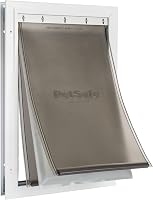
The PetSafe plastic frame is paintable, so it suits a visible entrance where you want the trim to blend with the human door. Follow PetSafe's finishing guidance and keep paint away from moving parts and sealing surfaces.
PetSafe designs both aluminum models with reinforced corners for active dogs and multi-pet homes. Choose one when the entrance will see repeated daily use and frame construction is a priority.
A calm single-dog household doesn't need aluminum simply because the dog is large. Size the opening for the animal, then decide whether traffic, weather or appearance gives you a reason to choose a particular frame.
What does a plastic vs aluminum dog door frame tell you?
The material describes the frame, not the whole entrance. Flaps, seals, fasteners, closing panels and the surrounding human door all affect how useful the finished installation will be.
A metal frame doesn't turn a manual flap door into selective access. Likewise, a plastic frame doesn't rule out a suitable exterior installation when the door and mounting requirements match.
Which PetSafe dog door fits your door thickness?
Measure the door before choosing a model, because the plastic option covers the widest thickness range. All three stop at 2 inches, but their minimums differ enough to rule out some installations.
- PetSafe Plastic: doors 1/16 to 2 inches thick.
- Freedom Aluminum: doors 3/8 to 2 inches thick.
- Extreme Weather Aluminum: doors 1 1/2 to 2 inches thick.
Measure where the cutout will sit, not just along the outer edge. A recessed panel may differ from the thicker rails around it, and surface trim can give a misleading measurement.
The plastic model supports interior or exterior wood, PVC, metal and paneled doors. Freedom Aluminum also supports storm-door installations, while Extreme Weather is intended for compatible exterior wood, paneled, PVC and metal doors.
Material compatibility doesn't mean every door of that material is suitable. Check for glass, internal reinforcement, lock hardware and any construction that the cutout could damage before marking the opening.
These door-mounted models shouldn't be assumed to fit a wall. If location is still undecided, compare wall mount vs door mount dog doors before committing to a frame.
How do you choose an opening your dog can use?
Choose by body measurements and step-over height, with weight used only as an extra check. A dog can fall within a weight limit and still be too broad or tall for comfortable passage.
The large plastic model has a 10 1/8 x 16 1/4-inch opening. Freedom Aluminum is 10 1/4 x 16 1/4 inches, so its small width advantage shouldn't drive the material decision.
Both of those large models are intended for pets up to 100 pounds. For Extreme Weather, confirm the large model's actual opening measurements before ordering rather than assuming that every PetSafe “Large” uses the same opening.
Measure the widest part of your dog's body and its standing height as directed in the sizing instructions. Use our dog door size chart to work through those measurements.
Plan the bottom edge too, especially for short-legged or older dogs. An opening placed too high can turn every trip outside into an awkward climb.
In a multi-pet home, account for both the largest animal's clearance and the smallest animal's reach. A cardboard outline can help you judge placement before making a permanent cut.
Who should buy or skip each PetSafe model?
Buy the model that solves your main installation or daily-use need. A higher score doesn't make a door the right choice if it won't fit your door or your pet.
PetSafe Plastic: choose it for color matching and thinner doors
The plastic model suits a homeowner who wants the frame to blend with a painted door. It also gives you an option when either aluminum model's minimum thickness would exclude the installation.
Its snap-on closing panel suits scheduled access, such as allowing daytime trips and closing the opening at night. Check that everyone who manages the dog can fit and remove the panel correctly.
Skip this model if your main requirement is the layered insulation available on Extreme Weather. Choose aluminum instead when reinforced corners for frequent pet traffic matter more than a paintable finish.
Freedom Aluminum: choose it for frequent daily use
Freedom Aluminum suits active dogs and homes where several pets share one entrance. Its flexible tinted flap, magnetic closure and weather stripping make it a practical exterior-door option without moving to the three-flap design.
Choose it when frame reinforcement is your main reason to move beyond plastic. Make sure the slide-in panel has room to be inserted and removed at the planned mounting point.
Skip it if the door is too thin or if controlling heat transfer is your main goal. In the latter case, compare its single flap with the Extreme Weather design before choosing.
Extreme Weather Aluminum: choose it for an exposed entrance
Extreme Weather suits a compatible exterior door where cold air or summer heat makes an open pet entrance a concern. Its three adjustable, flexible flaps use a magnetic seal, and the frame has reinforced aluminum corners.
PetSafe says its insulating flaps block 3 times more thermal energy than a standard pet door. Use that as a comparison of insulation design, rather than a forecast of household energy savings.
Skip it when the mounting door falls outside its thickness range. A hesitant dog may also need more gradual training to become comfortable pushing through layered flaps.
Which features matter most for drafts and security?
Flap closure and installation fit matter more than the frame label for drafts. For security, focus on when the opening stays accessible and how you'll close it.
Start with the exposure outside the door. An entrance facing wind and rain places different demands on the flap than one opening into a sheltered porch.
Freedom Aluminum includes weather stripping, while Extreme Weather adds layered insulation. Compare those designs in our guide to dog doors for cold weather, especially if the opening leads straight into a heated room.
Insulation also matters in air-conditioned homes during hot weather. Our explanation of how insulated dog doors work in winter covers the role of layered flaps and heat transfer.
All three models include a closing panel, but these are manual flap doors. While the opening is available to your dog, another animal of suitable size may also pass through.
Keep the route beyond the door secure and decide when access should stop. A closing panel belongs in a daily routine, rather than being treated as a substitute for supervising outdoor access.
How should you prepare and install the door?
Set the opening height, confirm the cutout and check clearances before cutting. A careful layout protects both the human door and your dog's ability to use the finished entrance.
First, read the instructions for the exact model and size. The plastic and Freedom Aluminum models include cutting templates and instructions, but a template still needs to be placed correctly.
Check that the frame won't interfere with a lock, handle or the door's swing. Leave the clearance needed to operate the closing panel and reach its edges.
Compare the template with your pet's measurements, then check that it sits level. Don't reuse an old cutout just because the replacement carries the same size name.
Secure the human door safely during the work and keep pets away from tools and cut edges. If its construction is unclear, have a qualified installer assess it before making the opening.
Follow the specified fastening sequence without forcing the frame against an uneven surface. Excessive tightening can distort a frame and leave the flap unable to move or close as intended.
Before allowing access, inspect both sides for exposed edges and loose parts. Our guide to how to install a dog door explains the broader sequence.
How do you help your dog use the new flap?
Introduce the opening slowly and reward calm movement through it. Start when you can supervise both sides and the outdoor area is secure.
Let your dog inspect the entrance before asking it to pass through. Where the instructions allow, holding the flap clear at first can help the dog learn the route without also dealing with flap pressure.
Use short sessions and rewards rather than pushing or pulling the dog through. Once the route feels familiar, gradually introduce contact with the flap.
Watch how the dog moves, rather than only whether it gets through. Repeated crouching, scraping or jumping may point to a sizing or placement problem that encouragement won't solve.
Don't leave the entrance open for unsupervised use until the dog can return through it comfortably. For a fuller sequence, follow our guide to training a dog to use a dog door.
What care keeps a dog door working properly?
Keep the flap path clean and inspect how the door closes. Dirt, fur and shifted parts can affect a plastic or aluminum model, so care should cover the whole assembly.
Wipe accessible surfaces using the cleaning method PetSafe recommends. Clear grit from panel tracks or attachment points so the closing panel can seat fully.
Inspect flexible flaps for tears, curling edges and debris at the closure. Check again after muddy weather or a noticeable impact, especially if the flap begins hanging open.
If you feel a draft, identify its path first. Air around the outer frame calls for an installation check, while a gap at the flap calls for attention to its position, condition or closure.
Check fasteners as directed, without repeatedly tightening them harder. If the frame shifts or the surrounding door becomes damaged, address that problem before continuing regular use.
Confirm the exact model and size when ordering parts. Our guide to replacing a dog door flap explains the checks to make before buying a replacement.
Which common buying mistakes should you avoid?
Avoid choosing by material or weight limit alone. The most expensive mistake is cutting a permanent opening before confirming every part of the fit.
Don't confuse flap dimensions with the cutout size. Use the correct template for the frame, and use the flap opening to judge your dog's clearance.
Don't assume a heavier or more active dog needs a larger hole only because you're moving to aluminum. Its body measurements determine size; daily traffic helps determine the frame choice.
Avoid buying insulation features for a door the model can't fit. Nor should you expect a reinforced frame to prevent every problem caused by impacts, poor mounting or a damaged flap.
Finally, plan how access will work when you're asleep or away. A door that suits daytime potty breaks still needs a clear closing routine and a secure outdoor destination.
How should you decide between plastic vs aluminum dog doors?
Eliminate models that fail the fit checks, then choose for your main daily need. That turns the plastic vs aluminum dog door choice into a practical decision rather than a contest between materials.
Pick PetSafe Plastic when paintability or a thin mounting door drives the choice. Pick Freedom Aluminum when frequent pet traffic makes reinforced corners the priority.
Choose Extreme Weather Aluminum when an exposed exterior entrance calls for layered insulation and the door is compatible. Before cutting, confirm pet clearance, panel clearance and the exact installation template.
If none of these models fits your location or access needs, review dog doors explained to choose a different type before making a permanent opening.
Frequently asked questions
Does an aluminum dog door hold up better than plastic?
Choose aluminum for frequent pet traffic because PetSafe designs these reinforced frames for active and multi-pet homes; actual service life also depends on installation, impacts and care. Plastic remains a practical choice when you need a paintable frame or compatibility with a thinner door.
Is an aluminum dog door better in cold weather?
Choose by insulation features rather than frame material; the Extreme Weather model uses three flexible flaps and a magnetic seal, making it the weather-focused choice here. A square installation and flaps that return fully to position also matter, so inspect the whole opening when checking for drafts.
What door thickness does the PetSafe plastic dog door fit?
The large PetSafe plastic model fits doors from 1/16 to 2 inches thick; measure at the intended cutout, especially on a paneled door where thickness can vary. That range allows thinner installations than either aluminum option here, but door construction and the installation instructions still need to match.
Do dog door closing panels keep other animals out?
A properly fitted closing panel blocks the pet opening while it is in place; an open flap can still allow unwanted animals through, and a panel isn't a substitute for household security. Use our guide to dog door security to plan access control around your home.