How to Train a Dog to Use a Dog Door
Here's how to train a dog to use a dog door: reward small steps through an open flap, then gradually introduce flap contact. Keep sessions short and never push or pull your dog through.
On this page (8 sections)
- How do you train a dog to use a dog door step by step?
- How should you prepare the dog door before training?
- What rewards help a dog learn the flap?
- What mistakes make dog door training harder?
- Which dog doors may suit a training setup?
- How can you help a dog use the door in both directions?
- How do you care for the flap and control access?
- When should you allow independent dog door use?
To learn how to train a dog to use a dog door, start with the flap held open, reward voluntary steps through, and introduce flap contact gradually. Practice in both directions before expecting your dog to use it without help.
A comfortable fit matters more than a fast result. If your dog freezes, backs away, or stops taking a favorite reward, make the task easier and finish with a small success.
How do you train a dog to use a dog door step by step?
Teach the open route first, then the moving flap. Work in sessions of about 2 to 5 minutes, ending sooner if your dog loses interest or becomes worried.
- Choose a quiet time and prepare small treats your dog likes.
- Open any closing panel and hold the flap clear as the instructions allow.
- Reward looking toward the opening, approaching it, and sniffing the frame.
- Reward a nose or paw moving through without asking for the whole trip.
- Invite your dog through the open doorway and reward immediately on arrival.
- Repeat from the other side until both directions feel familiar.
- Lower the flap slightly, letting your dog brush against it voluntarily.
- Gradually return the flap to its normal position, then reduce food rewards once trips become routine.
Stay at a stage until your dog repeats it calmly. If they cross only when you hold the flap high, spend more time there before adding contact.
How do you train a dog to use a dog door with the flap down?
Introduce light contact before a full push. Support most of the flap's weight at first, then gradually give less help as your dog learns that touching it opens the route.
Reward the first gentle nudge, even if your dog doesn't cross. Don't release the flap suddenly onto their head or back, and don't close it while they're halfway through.
How should you prepare the dog door before training?
Set up a stable frame, comfortable opening, and clear landing on both sides. A loose flap or slippery approach can make a willing dog hesitate.
Measure your dog's body width and standing height rather than choosing by weight alone. Our dog door size chart explains the measurements and clearance to check.
The bottom edge should be manageable without a difficult climb, and the opening shouldn't require squeezing. For a puppy, allow for growth; for an older dog, pay close attention to footing and the step over the sill.
Clear furniture, toys, and loose rugs from the approach. Use a secure outdoor enclosure, and check for steps or drops immediately beyond the opening.
Secure an open flap only as its instructions allow. Keep temporary ties and props out of chewing reach, and remove them before leaving the area.
What rewards help a dog learn the flap?
Use small, immediate rewards that your dog already enjoys. A treat, praise, or brief play can mark the exact step you want repeated.
Reward approaching first, then contact, then crossing. Place any lure beyond the opening where your dog can see it, clear of the moving flap.
Once your dog starts crossing willingly, give the treat after arrival instead of showing food before every trip. This helps them learn the route without waiting for a visible treat.
A helper can reward from the far side while you support the flap. Keep voices calm and let one person give the cue so the doorway doesn't become crowded or confusing.
What mistakes make dog door training harder?
Forcing contact, rushing stages, and practicing through fear can make the doorway harder to teach. Repeated refusals mean you should change the setup or return to an easier task.
- Pushing from behind: let your dog control the approach and retreat.
- Holding food too far away: reward a smaller step instead of stretching your dog through the opening.
- Teaching only the exit: practice returning indoors during every session.
- Adding several challenges together: introduce flap movement before distractions or reduced light.
- Expecting potty training to follow automatically: keep regular toilet trips and reward going in the right place.
If your dog crosses with the flap raised but refuses it closed, focus on gentle flap contact. If they avoid even the open frame, recheck the fit, footing, and surroundings.
A dog that struggles with ordinary steps or seems uncomfortable bending needs that issue addressed before more doorway practice. Extra rewards won't solve physical discomfort.
Which dog doors may suit a training setup?
Choose fit and installation compatibility first, then decide between weather protection, a simple flap, and frame construction. Our guide to dog door types explains the broader choices if you're still choosing an installation style.
These 3 medium models are designed for pets up to 40 lb. Their similar openings make body measurements more useful than the size label when deciding whether one will fit.
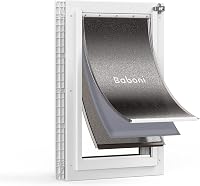
Baboni: for homes that need layered weather protection
The Baboni Plastic 3-Flap Dog Door, Medium suits households that want multiple weather barriers. It combines 2 vinyl flaps with magnetic closure and an insulated middle flap; Baboni says this arrangement helps limit drafts.
Its opening measures 8 1/4 x 12 1/4 in, and the telescoping tunnel fits doors from 1 3/8 to 1 31/32 in thick. Measure the actual door before choosing it.
Skip it if your door falls outside that range or your dog cannot fit comfortably. Multiple flaps add surfaces to introduce during training, so plan gradual practice rather than expecting an immediate full push.
PetSafe Plastic: for a simple setup with controlled access
The PetSafe Plastic Dog and Cat Door, Medium suits owners who want a paintable frame and a snap-on closing panel. The panel gives you a clear way to end access after a supervised session.
Its opening is 8 1/8 x 12 1/4 in, and it fits wood, PVC, metal, and paneled doors from 1/16 to 2 in thick. That thickness range makes it worth considering for a thin compatible door.
Skip it if your main priority is a layered insulated flap system. Choose it for its installation fit and access panel rather than assuming a plastic frame alone provides winter protection.
PetSafe Freedom Aluminum: for active households
The PetSafe Freedom Aluminum Pet Door, Medium suits active dogs and homes with several pets. PetSafe designs its aluminum frame with reinforced corners for those households, and it includes a flexible, tinted flap.
The opening measures 8 1/4 x 12 1/4 in, with installation in compatible doors from 3/8 to 2 in thick. A slide-in closing panel controls access between sessions.
Skip it for a door thinner than its minimum or a dog that needs a larger opening. Teach each pet separately before allowing shared traffic so a confident dog doesn't crowd a hesitant one.
All 3 include a cutting template and installation instructions. Follow the model's directions alongside our dog door installation guide, and finish the installation before inviting your dog through.
For an exposed exterior door, compare dog doors for cold weather before cutting. Weather protection should suit the location as well as your dog's training needs.
How can you help a dog use the door in both directions?
Teach entering and leaving as separate skills. The same opening can look different from outside because of light, sounds, or the landing surface.
Reward a few calm return trips before finishing each session. Then gradually move farther from the opening so your dog learns to cross without someone standing beside it.
Add normal household distractions only after quiet practice goes well. If cats share the home, our dog door and cat door comparison can help you plan access for both.
How do you care for the flap and control access?
Keep the flap path clean and the frame secure, and use a closing panel when outdoor access needs to stop. Grit, caught debris, or loose fittings can change how the opening feels.
Inspect flap edges, hinges, magnetic contact areas, and the threshold regularly. Clean according to the care instructions, and check that the flap moves freely and returns to its normal position afterward.
Before calling your dog through, confirm the panel is fully removed. Repeatedly approaching a blocked opening can confuse a dog that has just learned the route.
A closing panel controls access but doesn't replace checking the outdoor enclosure. Our dog door security guide covers panels, locks, and entry control.
When should you allow independent dog door use?
Allow more freedom when your dog crosses calmly both ways with the flap in its normal position and the outdoor space is suitable. Begin with nearby supervision before increasing distance or time.
Choose Baboni for layered weather protection, PetSafe Plastic for its paintable frame and snap-on panel, or PetSafe Freedom Aluminum for an active household that suits its frame design. Skip all 3 if the opening or installation range doesn't fit.
Knowing how to train a dog to use a dog door means knowing when to slow down, too. If progress stalls at the threshold, revisit the dog door size chart before asking for another attempt.
Frequently asked questions
How long does it take to train a dog to use a dog door?
Some dogs learn in a few short sessions, while others need days or longer. Move forward when your dog approaches and passes through calmly, rather than following a deadline, and return to an easier step if hesitation grows or your dog stops taking a favorite reward.
Should I push my dog through a dog door?
No, never push or pull your dog through a dog door. Forced movement can make the opening frightening, so hold the flap open and reward voluntary approaches instead, keeping the route clear so your dog can back away whenever they need more space or a break.
Can a puppy use a dog door?
A puppy can learn if the opening fits, the step is manageable, and both sides lead to a secure space. Supervise practice, check the fit as your puppy grows, and keep taking them out for regular potty breaks because learning the door does not teach bladder control.
What if my dog is afraid of the flap?
Start with the flap fully open and reward looking, approaching, and sniffing without asking your dog to pass through. Once the open route feels familiar, lower the flap slightly and reward gentle contact, checking for rattles, catches, or slippery footing if your dog becomes worried again.