8 Best Dog Doors for Cold Weather (November 2026)
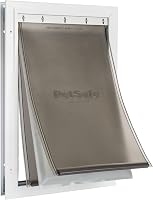
The best insulated dog doors for cold weather include the PetSafe Extreme Weather Aluminum Dog Door for busy multi-pet homes, the PetSafe Extreme Weather Aluminum Dog Door for medium dogs, and the PetSafe Extreme Weather Aluminum Dog Door for extra-large dogs.
On this page (9 sections)
- How we chose the best dog doors for cold weather
- Which cold-weather dog door fits your home?
- What makes a dog door useful in winter?
- How should you measure your dog and the installation spot?
- How do you prepare a dog door for its first winter?
- How do you find and fix winter drafts?
- Which buying mistakes cause trouble in cold weather?
- Is independent outdoor access worth it in winter?
- Which is the best dog door for cold weather for you?
The best dog door for cold weather for most compatible exterior doors is the PetSafe Extreme Weather Aluminum Dog Door, Large. Its layered flap design and reinforced frame make it a strong starting point, provided the opening fits your dog.
Choose the Medium or X-Large version for a different pet fit, Ideal Air Seal for hard panels, or a PETCOMING model for a compatible wall route. Start with measurements, because insulation features cannot rescue the wrong opening or mounting depth.
For a broader overview, read our dog door types and sizing guide. If the installation location is still undecided, compare wall mount and door mount dog doors.
Our picks at a glance
-
1
 Best for busy multi-pet homes
PetSafe Extreme Weather Aluminum Dog Door, Large
9.3/10 our score
See it on Amazon -
2
 Best for medium dogs
PetSafe Extreme Weather Aluminum Dog Door, Medium
8.6/10 our score
See it on Amazon -
3
 Best for extra-large dogs
PetSafe Extreme Weather Aluminum Dog Door, X-Large
8.5/10 our score
See it on Amazon
- 4
 Best for thinner exterior doorsCheck it
- 5
 Check it
PetSafe Extreme Weather Plastic Dog Door, 3-Flap Large
Best for color-matched entryways - 6
 Check it
PetSafe Extreme Weather Plastic Pet Door, Insulated Large
Best for thicker door replacements - 7
 Check it
PETCOMING Insulated Aluminum Dog Door, Large
Best for shallow wall openings - 8
 Check it
PETCOMING Insulated Aluminum Wall Dog Door
Best for deep wall installations
How we chose the best dog doors for cold weather
We prioritized layered barriers, reliable closure and installation fit, then compared frame construction and ways to close access. A winter door needs to suit both the building and the animal passing through it.
These 8 options include related sizes and similar plastic models, rather than 8 completely different insulation systems. The PetSafe aluminum sizes mainly solve different pet-fit needs, while the PETCOMING models solve different mounting-depth needs.
We compared each design's practical role without assuming that more flaps guarantee lower heating bills. Wind exposure, gaps around the frame and frequent trips through the opening all affect the result.
For the design tradeoffs behind these choices, read how insulated dog doors work in winter.
| Product | Best for | Flap system | Frame | Mounting thickness | Our score |
|---|---|---|---|---|---|
| PetSafe Extreme Weather Aluminum Dog Door, Large | busy multi-pet homes | 3 flexible flaps with magnetic seal | Aluminum with reinforced corners | 1.5–2 in | 9.3 |
| PetSafe Extreme Weather Aluminum Dog Door, Medium | medium dogs | 3 flexible flaps with magnetic seal | Aluminum with reinforced corners | Confirm with PetSafe | 8.6 |
| PetSafe Extreme Weather Aluminum Dog Door, X-Large | extra-large dogs | 3 flexible flaps with magnetic seal | Aluminum with reinforced corners | 1.5–2 in | 8.5 |
| Ideal Air Seal Pet Door | thinner exterior doors | Dual-pane hard panels with air gap | Plastic | 1.25–1.75 in | 8.3 |
| PetSafe Extreme Weather Plastic Dog Door, 3-Flap Large | color-matched entryways | 3 flaps with insulated center | Paintable plastic | 1.625–2.25 in | 8.2 |
| PetSafe Extreme Weather Plastic Pet Door, Insulated Large | thicker door replacements | 3 flaps with insulated center | Paintable plastic | 1.625–2.25 in | 7.9 |
| PETCOMING Insulated Aluminum Dog Door, Large | shallow wall openings | 3 flaps including insulation flap | Aluminum | 1.26–2.08 in | 7.1 |
| PETCOMING Insulated Aluminum Wall Dog Door | deep wall installations | 3 flaps | Aluminum | 3.95–7.5 in | 7.0 |
Which cold-weather dog door fits your home?
Choose a door-mounted model when your exterior door is suitable for cutting, or a dedicated wall model when the route needs a deeper tunnel. Within that group, select the opening that fits your dog comfortably.
PetSafe Extreme Weather Aluminum Dog Door, Large: Best for busy multi-pet homes
- 3 flexible flaps
- Magnetic seal
- Aluminum frame with reinforced corners
- Fits exterior doors 1.5–2 in thick
A reinforced frame and layered flap design suit frequent trips through a compatible exterior door. Choose Large only after checking your dog's measurements.
Pros
- Layered insulation
- Reinforced aluminum corners
- Slide-in closing panel
Cons
- Needs a permanent door cutout
- Not a deep-wall installation model
Choose the Large aluminum PetSafe for a busy household that wants independent pet access through a compatible exterior door. The reinforced corners are useful construction features for a frame used repeatedly by one or several pets.
Its 3 adjustable flexible flaps and magnetic seal provide the weather barrier. PetSafe says this system blocks 3 times more thermal energy than a standard pet door, which is a heat-transfer claim rather than a prediction of household savings.
It fits paneled, wood, PVC and metal exterior doors 1.5–2 in thick. The slide-in closing panel also gives you a way to stop access overnight or during severe weather.
Skip it if your dog needs another opening size or the planned route passes through a deep wall. Check the usable flat area on a paneled door before cutting, and read our PetSafe Extreme Weather Dog Door review for a closer look.
PetSafe Extreme Weather Aluminum Dog Door, Medium: Best for medium dogs
- 3 flexible flaps
- Magnetic seal
- Reinforced aluminum frame
- Slide-in closing panel
Choose the medium opening when it gives your dog comfortable clearance without an unnecessary larger cutout. Confirm mounting thickness with PetSafe before ordering.
Pros
- Medium size option
- Adjustable flexible flaps
- Slide-in closing panel
Cons
- Door thickness guidance conflicts
- Opening measurements need checking
Choose the Medium version when its opening gives your dog enough clearance without moving up to a larger cutout. An unnecessarily large opening creates more space to manage without helping a pet that already fits comfortably.
This model shares the aluminum range's insulation layout and access panel. The reason to choose it over the top pick is pet fit, not an expectation of a different weather barrier.
Confirm its mounting range with PetSafe before ordering, because the thickness guidance conflicts. Have your door measurement ready, including the depth at the exact place where the frame will sit.
Skip Medium if your dog must twist, crouch sharply or brush both sides to pass through. In a multi-pet home, check every animal that will use it, especially a smaller pet that may struggle with the planned step-over height.
PetSafe Extreme Weather Aluminum Dog Door, X-Large: Best for extra-large dogs
- 3 flexible flaps
- Magnetic seal
- Reinforced aluminum frame
- Slide-in closing panel
The larger size suits dogs that need more clearance than the Large opening allows. Check placement and usable door space before committing to the cutout.
Pros
- X-Large size option
- Adjustable flexible flaps
- Closing panel included
Cons
- Larger cutout needs careful placement
- Size name does not guarantee pet fit
Choose X-Large when the Large opening does not give your dog comfortable clearance. A broad chest, deep body or limited ease of movement can matter more than a size label or weight figure.
This version keeps the same basic weather-barrier design as the smaller aluminum options. Its exterior-door installation guidance covers 1.5–2 in thickness, so moving up a pet size does not turn it into a wall-mount kit.
Before buying, check how much solid door area remains around the planned cutout. Keep the frame clear of hardware, raised trim and the door's edges, following PetSafe's placement instructions.
Skip this size if a smaller opening already meets your dog's needs. For a household with dogs of different heights, plan the lower edge for comfortable shared use rather than making the smallest dog climb through an opening positioned only for the largest.
Ideal Air Seal Pet Door: Best for thinner exterior doors
- Dual-pane LEXAN hard panels
- Insulating air gap
- Fits doors 1.25–1.75 in thick
- Spring-loaded locking slide
This hard-panel design suits compatible thinner doors and dogs comfortable pushing through a rigid panel. Resolve the conflicting opening and cutout measurements with Ideal before buying.
Pros
- Air gap between panels
- Locking slide
- Fits some thinner doors
Cons
- Opening and cutout guidance conflicts
- Hard panels may require extra pet training
Choose Ideal Air Seal if you prefer dual-pane LEXAN hard panels with an air gap to flexible flap layers. Its mounting range of 1.25–1.75 in also suits some thinner doors outside the PetSafe aluminum range.
Ideal gives a dog weight range of 35–90 lb, but body measurements must still decide fit. The spring-loaded locking slide provides a separate way to restrict access.
Resolve the opening and cutout measurements with Ideal before buying, because the dimensions conflict. Never make a cut from an assumed relationship between flap size and frame size.
Skip it if you cannot confirm the dimensions or want to keep a familiar flexible-flap feel for a hesitant dog. A rigid panel introduces a different movement and contact sensation, so plan gradual training with the panel supported as the instructions allow.
PetSafe Extreme Weather Plastic Dog Door, 3-Flap Large: Best for color-matched entryways
- 3 flaps with insulated center
- Paintable plastic frame
- Fits doors 1.625–2.25 in thick
- Snap-on closing panel
A paintable frame suits an entryway where matching the door finish matters. Its mounting range also covers some doors too thick for the PetSafe aluminum options.
Pros
- Insulated center flap
- Paintable frame
- Foam strip and weather strips included
Cons
- Second closing panel sold separately
- Needs a permanent door cutout
Choose this plastic PetSafe when you want the frame to blend into a painted exterior door. Its paintable frame is the main reason to favor it over an aluminum option when both would fit.
The 3-flap system includes an insulated center flap, and the mounting range is 1.625–2.25 in. That makes it worth considering for a door too thick for the aluminum models above.
A snap-on panel closes pet access, and PetSafe offers a second panel separately for added weather protection while closed. The package also includes a foam strip, weather strips, a cutting template and installation instructions.
Skip it if your door falls outside the mounting range or you specifically want a reinforced metal frame. If painting, follow the finish guidance and keep paint away from flap edges, moving parts and any surface that must meet tightly.
PetSafe Extreme Weather Plastic Pet Door, Insulated Large: Best for thicker door replacements
- 3 flaps with insulated center
- Paintable plastic frame
- Fits doors 1.625–2.25 in thick
- Snap-on closing panel
An option for replacing a pet door in a thicker exterior door, provided the existing cutout matches. It shares the basic insulation layout of the plastic model above.
Pros
- Insulated center flap
- Paintable frame
- Snap-on closing panel
Cons
- Existing cutout compatibility needs checking
- No clear insulation advantage over the plastic model above
Consider this PetSafe plastic model when replacing an existing door in a thicker exterior door. Its 1.625–2.25 in mounting range is useful, but replacement fit also depends on the old cutout's height, width and position.
It has the same basic insulated-center, three-flap layout as the plastic model above. There is no clear insulation advantage here that justifies choosing it solely because its name differs.
The paintable frame and snap-on panel suit a door where you want a matching finish and manual control over access. Before removing an old unit, compare its opening with this model's installation template and required frame overlap.
Skip it if you are expecting a direct replacement based only on the PetSafe brand name. An oversized existing hole may need repair, and a misplaced cutout cannot always be corrected by fitting a different frame over it.
PETCOMING Insulated Aluminum Dog Door, Large: Best for shallow wall openings
- 3-flap system
- Magnetic strips and dust strips
- Fits doors or walls 1.26–2.08 in thick
- Closing panel with aluminum lock
Choose this model for a compatible door or shallow wall opening. Check its relatively narrow opening against your dog's body width, even when weight falls within the limit.
Pros
- Door or shallow-wall mounting
- Frame dust strips
- Lockable closing panel
Cons
- Not suitable for deeper walls
- Weight limit alone does not confirm fit
Choose this PETCOMING for a door or genuinely shallow wall opening 1.26–2.08 in thick. Its adjustable channels do not cover the depth of the dedicated wall model below.
The opening is 18.7 x 9.92 in, with a stated maximum pet weight of 110 lb. Check the narrower dimension against your dog's widest point rather than assuming every dog under the weight limit will fit.
The design combines an insulation flap with magnetic strips on the outer flaps and dust strips at the frame. A closing panel and aluminum lock let you stop pet access.
Skip it for a deeper wall or a broad dog that needs more width. For a shallow wall installation, measure the entire finished assembly and plan weather sealing at the exterior face rather than treating the frame alone as protection against rain.
PETCOMING Insulated Aluminum Wall Dog Door: Best for deep wall installations
- 3-flap system
- Aluminum frame
- Telescoping tunnel fits walls 3.95–7.5 in thick
- Dual locks and removable panel
The telescoping tunnel suits a deeper wall route when a door cutout is unsuitable. Plan the wall location, exterior weather sealing and pet clearance before installation.
Pros
- Dedicated wall tunnel
- Dual locks
- Replacement flaps available
Cons
- More involved installation than a door cutout
- Wall cavity needs checking before cutting
Choose the PETCOMING wall model when your preferred route needs a telescoping tunnel for a 3.95–7.5 in wall. It lets you place the opening away from a door that is unsuitable for cutting.
It shares the other PETCOMING model's opening dimensions and pet weight limit, so the deeper tunnel does not provide a wider passage. The removable closing panel and dual locks control access, and replacement flaps are available.
A wall route needs more planning for the cavity, exterior finish and moisture control. Check for wiring, pipes and structural parts before any cut, and use a qualified installer if the route is uncertain.
Skip it when the finished wall falls outside its tunnel range or you need a removable installation. Read how to install a dog door in a wall before deciding whether this route suits your home.
What makes a dog door useful in winter?
A useful winter dog door closes fully between trips and seals at the frame. Insulation layers address only part of the job, because air can also pass around a poorly fitted opening.
How do you choose the best dog door for cold weather?
Choose the right mounting type and pet opening first, then compare insulation and access controls. Eliminate models that fail either fit check before weighing frame material or appearance.
Think about your winter routine as well. A dog using the opening all afternoon creates a different need from one taking a few supervised breaks before the panel goes back in place.
Do flap layers stop both drafts and heat loss?
Extra layers create barriers, but air leakage and heat transfer are different problems. An insulating center layer can help resist heat transfer while a flap caught open still admits a draft.
Inspect how every layer hangs after your dog passes through. Edges should return to their intended positions without catching on another flap, the frame or debris.
Are hard panels better than flexible flaps?
Choose the movement your dog can use comfortably, then check how the door closes. The hard-panel option here uses an air gap, while flexible designs use overlapping barriers and, on some models, magnetic closure.
A stronger-feeling closure is not helpful if a timid dog refuses to push through it. Allow training time instead of choosing by panel stiffness alone.
Should you choose aluminum or plastic?
Choose material after fit and closure, because neither material guarantees a draft-free opening. A straight frame, suitable mounting surface and correctly seated seals matter with either choice.
Paintable plastic suits a coordinated entryway, while reinforced aluminum may match your construction preference. Do not assume an aluminum frame automatically makes every part of the door insulated.
How should you measure your dog and the installation spot?
Measure your dog's body, the opening location and the finished mounting depth before ordering. Pet weight and labels such as Large are only starting points.
Measure the widest part of the body and follow the brand's method for opening height and lower-edge placement. Include comfortable clearance, rather than choosing a passage your dog can just squeeze through.
Use a cardboard outline to picture the opening at the planned height. This helps reveal awkward step-over clearance without cutting into your home.
Our dog door size chart and measuring guide explains which measurements to gather. In a shared-pet home, repeat the process for every animal that needs access.
At the mounting location, measure the full door or wall thickness, including finishes that the frame or tunnel must span. Do not use the thickness of a nearby trim board as a substitute.
Check both sides of the opening for steps, tight corners and obstacles. A clear indoor approach is not enough if your dog exits onto an awkward drop or cannot turn comfortably outside.
For a door installation, check that the finished frame will not strike a wall or interfere with hardware when the main door swings. Confirm that the closing panel can also be inserted and removed without obstruction.
How do you prepare a dog door for its first winter?
Start with a sound cutout, correct weather sealing and a clear approach. Plan installation during a dry period when you can finish the opening and teach your dog before relying on it.
Prepare before making the cut
Read the instructions for the exact model and match the physical template to the planned location. Confirm panel access, mounting depth and pet clearance one final time.
Check whether the main door is suitable for modification, especially if it has special construction or serves as a required fire barrier. For a standard installation overview, see how to install a dog door.
For a wall route, the wall installation guide covers the extra planning. Include the exterior finish and moisture barrier in the work plan, not just the indoor frame.
Keep the frame straight and seals functional
Tighten fasteners as directed instead of forcing an uneven surface flat with extra pressure. A distorted frame can affect how moving parts meet.
Apply weather sealing only where the instructions call for it. Keep sealant away from flaps, moving joints and any drainage paths so the door can work as designed.
Teach the route before leaving access open
Introduce the opening in short, calm sessions with rewards on the other side. Support the flap only as allowed by the instructions, then gradually let your dog feel its normal movement.
Do not push a reluctant dog through. Use our dog door training guide if your pet hesitates, backs away or learns to travel only in one direction.
How do you find and fix winter drafts?
First find whether air enters through the flap or around the frame, because those problems need different fixes. Check with the main exterior door shut and the pet flap resting normally.
A light tissue held safely near the edges can help reveal air movement. Avoid candles or other flames near plastic, fur and moving flaps.
If the flap is the source, remove trapped fur or grit and check alignment. Inspect the lower edge after wet or freezing weather, since snow, moisture or ice can keep it from seating properly.
If the frame is the source, inspect the perimeter seal and fasteners against the installation instructions. Adding tape across moving flaps may block your dog's route while leaving the real frame gap unresolved.
Use mild cleaning methods approved for the materials and dry the contact edges afterward. Avoid scraping ice with sharp tools that could damage a flap or seal.
Check the outside landing after snowfall and keep it clear enough for the flap to swing. Replace cracked or misshapen parts with compatible replacements rather than trimming away material needed for closure.
Which buying mistakes cause trouble in cold weather?
The biggest mistakes are buying by pet weight, ignoring mounting depth and expecting insulation to correct poor placement. Catching these before ordering prevents unnecessary cutting and repair.
- Choosing extra size without a reason: Give your dog comfortable clearance, but do not enlarge the opening simply because a bigger model is available.
- Confusing flap size with cutout size: The passage, frame and installation hole serve different purposes, so use the exact template.
- Treating every wall model alike: A shallow mounting channel cannot span a full wall cavity just because the frame fits the surface.
- Ignoring wind exposure: Prefer a suitable sheltered location when possible, without placing the exit where drifting snow will block it.
- Expecting a closing panel to allow access: A closed panel stops your dog too, so check where every pet is before fitting it.
- Keeping worn flaps indefinitely: A damaged edge can defeat the purpose of a layered door even when the frame remains sound.
Resolve conflicting measurements before buying, particularly for the Medium PetSafe and Ideal options here. Guessing at fit creates more work than choosing another compatible model.
Is independent outdoor access worth it in winter?
Independent access is useful when your dog can use the route comfortably and the outdoor space is suitable. It is less useful when you need to supervise every trip or close the opening for most of the day.
A pet door's climate guidance describes the product, not a safe outdoor temperature for your dog. Keep a plan for supervised breaks and indoor access during severe weather.
Use the closing panel during periods when access is unnecessary, after checking every pet's location. Keep another toilet-break routine available if snow, ice or repairs temporarily block the door.
A pet-access panel also serves a different role from your home's main locks. Read dog door security tips and whether dog doors are safe for your home when deciding where to place the opening and when to close it.
Which is the best dog door for cold weather for you?
Choose the PetSafe aluminum model in the size your dog needs for a compatible exterior door. Large is the first choice for its reinforced construction and layered closure, while Medium and X-Large solve different clearance needs.
Choose Ideal for a compatible thinner door and a preference for hard panels, after resolving its dimensions. Choose a PetSafe plastic model when its mounting range or paintable finish better suits your entryway.
For a wall route, choose the PETCOMING model whose depth matches the full finished wall. Neither a shallow channel nor a deep tunnel should be forced into the wrong opening.
The best dog door for cold weather is the one that fits both your home and your dog, closes properly and supports your winter routine. Before ordering, use our insulated dog door guide to make your final check of the weather-barrier design.
Our top 3 picks at a glance
-
1
Best for busy multi-pet homes
PetSafe Extreme Weather Aluminum Dog Door, Large
9.3/10 our score
See it on Amazon -
2
Best for medium dogs
PetSafe Extreme Weather Aluminum Dog Door, Medium
8.6/10 our score
See it on Amazon -
3
Best for extra-large dogs
PetSafe Extreme Weather Aluminum Dog Door, X-Large
8.5/10 our score
See it on Amazon
Frequently asked questions
Do dog doors let cold air into the house?
Yes, dog doors can admit cold air while open or through gaps around flaps and frames. Multiple barriers help when closed, but careful installation and clean seals still matter.
Choose an opening that fits your pet comfortably, then use the closing panel during periods when outdoor access is unnecessary.
Are three-flap dog doors better for winter?
Three-flap doors add barriers that can reduce heat transfer and drafts compared with a simple single-flap design. Some also include an insulated center flap.
Choose based on mounting fit and reliable closure too, since an extra layer offers little help if a flap stays caught open or air bypasses the frame.
Can I install an insulated dog door in a wall?
Yes, use a wall-compatible model whose tunnel covers the full finished wall thickness. Include interior and exterior finishes in that measurement.
Before cutting, check for wiring, plumbing and structural parts, and plan exterior weather sealing.
Use a qualified installer when you cannot confirm a suitable route through the wall.
How do I reduce drafts around a dog door?
Find whether the draft comes through the flap or around the frame before changing anything. Clean the flap edges, check alignment and follow the installation instructions for frame sealing.
Keep snow and debris clear outside, replace damaged compatible parts, and close the access panel when your dog does not need it.
Should I choose a plastic or aluminum dog door for cold weather?
Choose the model that fits your door and pet, then compare its insulation and closure design. Frame material alone does not determine winter performance.
Aluminum may suit your frame preferences, while paintable plastic can match your entryway.
Neither choice removes the need for a snug installation and regular flap care.