9 Best Cat Doors (November 2026)
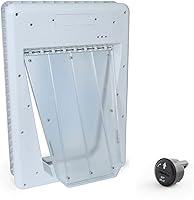
The best cat doors include the SureFlap Microchip Cat Flap for blocking unfamiliar cats, the PetSafe Freedom Aluminum Pet Door for shared small-pet access, and the Cat Mate 360 Microchip Cat Flap for manual access routines.
On this page (9 sections)
- How we chose these cat doors
- Cat door comparison by access, opening and lock
- Best cat doors for each type of home
- How to choose a cat door that fits
- Where should you install a cat door?
- How do you set up a cat door and teach your cat to use it?
- How should you care for a cat door?
- Which mistakes cause the most cat door problems?
- Which cat door should you choose?
The SureFlap Microchip Cat Flap is the best cat door for most homes that need to admit a familiar cat while discouraging unfamiliar visitors. Choose a different model if your main need is a larger passage, separate exit rules for each cat or access to an indoor litter room.
Start with the job the door must do. Keeping neighborhood cats outside, keeping one of your own cats indoors and letting a cat reach a closed laundry room are different problems.
Then check fit before features. A reader, timer or display is useful only if your cat can pass comfortably and the frame suits the installation surface.
For options that also suit dogs, see our guide to electronic dog doors. Our guide to choosing a smart dog door explains how chips, collar sensors and other access controls differ.
Our picks at a glance
-
1

-
2
 Best for shared small-pet access
PetSafe Freedom Aluminum Pet Door, Small
8.3/10 our score
See it on Amazon -
3

- 4
 Best for larger catsCheck it
- 5
 Check it
SureFlap DualScan Microchip Cat Door
Best for mixed indoor-outdoor households - 6
 Check it
PetSafe Interior Cat Door, 2-Way Lock
Best for litter-room access - 7
 Check it
Cat Mate Electromagnetic Cat Flap
Best for collar-comfortable cats - 8
 Check it
Cat Mate Elite Microchip Cat Door with Timer
Best for overnight routines - 9
 Check it
Cat Mate Elite I.D. Disc Cat Flap
Best for checking passage activity
How we chose these cat doors
We compared access control, usable opening size and installation needs to match each door to a clear household task. The scores reflect those features and limits, with selective entry leading the choices for exterior cat access.
A manual flap can be the better choice between rooms, where identifying each pet adds little value. Outside, chip or collar-key entry matters more if unfamiliar cats visit your yard.
We also separated household-wide locks from individual permissions. A four-way switch controls travel direction, a timer controls access times, and a reader that checks exit can distinguish between pets leaving.
Cat door comparison by access, opening and lock
Choose the access method first, then compare clear openings and mounting requirements. A taller flap may still be too narrow, and a larger outer frame does not always mean more room for your cat.
| Product | Best for | Access | Flap opening | Power | Our score |
|---|---|---|---|---|---|
| SureFlap Microchip Cat Flap | blocking unfamiliar cats | Microchip-controlled entry | 4 3/4 in H x 5 5/8 in W | 4 AA non-rechargeable alkaline batteries | 9.0 |
| PetSafe Freedom Aluminum Pet Door, Small | shared small-pet access | Manual flap and closing panel | 5 1/4 in W x 8 1/8 in H | 8.3 | |
| Cat Mate 360 Microchip Cat Flap | manual access routines | Microchip-controlled entry | 145 x 145 mm | 8.2 | |
| SureFlap Microchip Pet Door | larger cats | Microchip-controlled entry with curfew | 6 11/16 in H x 7 in W | 4 C non-rechargeable alkaline batteries | 8.1 |
| SureFlap DualScan Microchip Cat Door | mixed indoor-outdoor households | Microchip recognition with individual exit permissions | 4 3/4 in H x 5 5/8 in W | 4 AA batteries | 8.0 |
| PetSafe Interior Cat Door, 2-Way Lock | litter-room access | Manual sliding lock | 7.8 | ||
| Cat Mate Electromagnetic Cat Flap | collar-comfortable cats | Collar-magnet entry | 145 x 145 mm | One 9V battery | 7.5 |
| Cat Mate Elite Microchip Cat Door with Timer | overnight routines | Microchip-controlled entry | 7.4 | ||
| Cat Mate Elite I.D. Disc Cat Flap | checking passage activity | Pet Mate I.D. discs | 145 x 145 mm | 7.2 |
Use the table to eliminate poor fits before comparing smaller features. If your cat needs extra clearance, or one pet must stay inside, those needs should decide your shortlist.
Best cat doors for each type of home
Choose the standard SureFlap for selective entry, DualScan for different outdoor permissions, or the PetSafe Interior model for room access. The other picks cover shared pet passages, collar keys and scheduled routines.
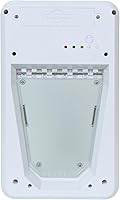
SureFlap Microchip Cat Flap: Best for blocking unfamiliar cats
- Compatible implanted microchip recognition
- Memory for up to 32 identities
- Entry-only scanning
- Low-battery indicator
A collar-free entry option for cats with compatible chips. Choose it to help keep unfamiliar cats outside, rather than to set different exit rules for your pets.
Pros
- Stores up to 32 identities
- Supports several common microchip formats
- Door, window and wall installation options
Cons
- Does not identify cats on exit
- Compact opening needs careful measurement
- Batteries sold separately
The SureFlap Microchip Cat Flap suits a cat with a compatible implanted chip whose household needs selective entry without a collar key. It supports 9-digit Avid Secure, 10-digit FDXA and 15-digit FDXB numbers, subject to compatibility exceptions.
Confirm the actual chip number before ordering, especially for codes beginning 000, 010 or 020. Your veterinarian or chip records can help identify the format.
This is an entry reader, so it is the wrong choice if an indoor-only cat could reach the same exit. The manual lock changes permitted travel, but it does not give each cat a different outward rule.
Program your cat before relying on the door for everyday access. The one-button setup and low-battery light simplify routine use, while the compact passage makes a careful size check essential.
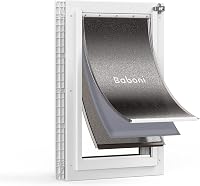
PetSafe Freedom Aluminum Pet Door, Small: Best for shared small-pet access
- Reinforced aluminum corners
- Flexible tinted flap
- Slide-in closing panel
- For pets under 15 lb
A simple passage for a cat and small dog that can share the same opening. The closing panel blocks access, but the open flap cannot distinguish your pets from other animals.
Pros
- Aluminum frame with reinforced corners
- Closing panel included
- Template and installation hardware included
Cons
- No selective entry
- Small version is for pets under 15 lb
The PetSafe Freedom Aluminum Pet Door, Small suits a cat and small dog that can share a passage without electronic identification. Its tall, narrow opening deserves attention if one pet has broad shoulders.
The reinforced aluminum corners suit an active shared doorway, and the flexible tinted flap provides a simple push-through route. Weather stripping and a magnetic flap closure are included, but this is not the choice for selective entry.
Use the slide-in panel when you want the passage closed. While the flap is available, another animal small enough to fit can use it too.
Choose this model for a suitable door and pets under 15 lb. Skip it if neighborhood cats already enter your home, or if you need one pet to pass while another stays behind.
Cat Mate 360 Microchip Cat Flap: Best for manual access routines
- Compatible microchip recognition
- Four-way rotary lock
- Brush-sealed flap
- Self-lining to 85 mm
A microchip flap for households that prefer to change access settings by hand. Its square passage offers more clearance than the compact SureFlap cat models.
Pros
- Four-way rotary lock
- Collar-free access with a compatible chip
- Wall and glass adapter options
Cons
- Does not support 10-digit chips or chips containing letters
- Batteries sold separately
The Cat Mate 360 Microchip Cat Flap suits owners who want chip-controlled entry and prefer to change access settings by hand. Its four-way rotary lock offers both directions, entry only, exit only or closed.
That makes it useful for a household where you let a cat return home, then close access yourself. It is less suited to someone who wants the door to follow a daily schedule automatically.
Check chip compatibility early: this model does not support 10-digit chips or chips containing letters. A compatible Cat Mate I.D. disc is another access option, sold separately.
Its square passage offers more height and width than the compact SureFlap cat models. Choose it when that shape fits your cat and the chip check is clear; skip it if individual exit permissions are essential.
SureFlap Microchip Pet Door: Best for larger cats
- Microchip-controlled entry
- Larger passage
- Programmable curfew
- Memory for up to 32 identities
Choose this model when your cat needs more clearance and your household needs scheduled access. Its entry reader does not give individual cats different exit permissions.
Pros
- Roomier opening than the compact SureFlap models
- Scheduled locking
- One RFID collar tag included
Cons
- Entry-only identification
- Batteries sold separately
- Some installations need extra mounting parts
The SureFlap Microchip Pet Door is the better SureFlap choice for a cat that needs more passage room. It also adds a programmable curfew for households that want access to follow set times.
The wider opening may help a broad cat avoid brushing both shoulders against the frame. Check the required step height as well, since extra width alone does not make a high opening comfortable.
Its reader identifies pets entering, not individual pets leaving. Skip it if one resident cat must remain indoors while another has outdoor access.
One RFID collar tag is included for a pet without a compatible chip. For installation, plan for a glass mounting adapter or any wall adapter and tunnel extensions required, rather than assuming the main unit completes every mounting job.
SureFlap DualScan Microchip Cat Door: Best for mixed indoor-outdoor households
- Individual exit permissions
- Memory for up to 32 pets
- Microchip or compatible RFID tag access
- Low-battery display
The clearest choice here when one cat may go outside and another must stay indoors. Check the compact passage before choosing it for a broad or tall cat.
Pros
- Exit rules for each recognized pet
- Stores up to 32 pets
- Door, window and wall installation options
Cons
- Compact flap opening
- Batteries sold separately
- RFID collar tags sold separately
The SureFlap DualScan Microchip Cat Door is the strongest match when your cats have different outdoor rules. You can give an outdoor cat exit permission while keeping another recognized cat indoors.
That distinction matters more than the number of pets stored in memory. A door can remember many identities yet still allow every cat to leave when its outward route is open.
The compact opening matches the standard SureFlap cat flap, so DualScan adds control rather than passage space. Skip it if that opening is too tight, even if its permission system is exactly what you want.
Register every resident cat and check each cat’s assigned access before normal use. Keep another secure barrier in place during setup so an incorrect permission does not give an indoor cat an unexpected route outside.
PetSafe Interior Cat Door, 2-Way Lock: Best for litter-room access
- Manual sliding lock
- High-impact frame
- For cats up to 15 lb
- Template and hardware included
An interior passage that keeps a food or litter room accessible when the human door is closed. It cannot exclude another pet small enough to pass through.
Pros
- Simple sliding lock
- Installation template included
- Fits several interior door materials
Cons
- No pet identification
- For interior use
- Designed for cats up to 15 lb
The PetSafe Interior Cat Door, 2-Way Lock is the practical choice for food or litter access behind a closed door. It lets you keep a laundry room or closet door shut without blocking your cat’s route.
Its sliding lock is useful when cleaning the room or temporarily restricting access. Make sure another litter box or needed resource remains available whenever you close the passage.
This model does not identify pets. A small dog or another cat that fits can follow through, so it cannot reserve food for one animal simply because it is called a cat door.
Choose it for a cat up to 15 lb and an interior door within its thickness range. Skip it for exterior access, and confirm usable flap clearance before cutting because the outer frame dimensions are not passage dimensions.
Cat Mate Electromagnetic Cat Flap: Best for collar-comfortable cats
- Two collar magnets included
- Four-way manual lock
- Brush and rain seals
- Self-lining to 60 mm
A collar-magnet alternative for cats that already accept a collar. The magnet controls entry, while the manual four-way lock sets the permitted direction of travel.
Pros
- Two collar magnets included
- Four-way lock
- Brush-sealed flap with rain seal
Cons
- Magnet required for entry
- Exit is not selective by pet
- Battery sold separately
The Cat Mate Electromagnetic Cat Flap suits a cat that already accepts a collar and whose owner prefers a magnet-based entry key. Two collar magnets are included.
Entry requires the magnet, while exit is not selective by pet. The four-way lock sets travel direction for the doorway as a whole, rather than giving individual cats different permissions.
Attach the magnet directly to the collar with the paw-print symbol facing forward, following Cat Mate’s instructions. Incorrect placement can interfere with access, so check the collar arrangement before assuming the flap has a fault.
Skip this model for a cat that will not tolerate a collar or for a household needing per-cat exit rules. Its brush and rain seals address weather exposure, but the installation still needs a sound seal around the frame.
Cat Mate Elite Microchip Cat Door with Timer: Best for overnight routines
- Microchip-controlled entry
- Programmable timer
- Four-way locking
- For small to medium cats
A timer-equipped option for small to medium cats that follow the same household schedule. It controls entry by chip but does not assign individual exit permissions.
Pros
- Programmable access times
- Collar-free microchip entry
- Four-way locking
Cons
- No individual exit permissions
- Flap clearance needs confirmation before cutting
The Cat Mate Elite Microchip Cat Door with Timer suits small to medium cats that follow a shared daily access schedule. Chip recognition controls entry, while the timer operates the four-way locking system.
Choose it if your main goal is changing access at set times without moving a manual switch each evening. Plan the schedule around when your cat normally returns, and check which directions remain available in each timed setting.
It does not distinguish between individual cats leaving when outward access is allowed. A timer therefore cannot replace separate exit permissions for an indoor-only companion.
Before installation, confirm the clear flap opening as well as the cut-out. The cut-out measures the hole needed in the surface, not the space your cat will have after the door is fitted.
Cat Mate Elite I.D. Disc Cat Flap: Best for checking passage activity
- I.D. disc access for up to 9 cats
- Timer and four-way lock
- LCD activity information
- Brush-sealed flap
Disc-based entry and exit control with a display showing passage information for selected cats. Choose it if you want this extra status information and your cats accept collar discs.
Pros
- Timer control
- Electronic entry and exit control
- LCD information for up to 3 selected cats
Cons
- Requires wearable I.D. discs
- Activity display is not live location tracking
The Cat Mate Elite I.D. Disc Cat Flap suits collar-wearing cats whose household wants access controls plus passage information.
It uses unique Pet Mate I.D. discs for electronic entry and exit.
It supports up to 9 cats, while the LCD shows location status and time since use for up to 3 selected cats. Treat that information as a record of flap activity, rather than a live view of where a cat is now.
The timer and four-way lock help manage routines. Its brush-sealed flap and magnetic closure also address drafts at the passage.
Choose it if checking recent use would help you manage several cats. Skip it if collar-free entry is the priority, and remember that a lost disc needs attention before your cat can rely on normal access again.
How to choose a cat door that fits
Choose a cat door by checking your cat’s clearance, the access rules and the mounting surface, in that order. Remove any model that fails one of those checks before comparing displays or timers.
What should you measure before buying a cat door?
Measure your cat’s widest body point without squeezing the coat, then assess the height needed to pass in a natural crouch. Leave room for movement rather than choosing a gap your cat can barely squeeze through.
A cardboard opening can help you judge the shape before making a permanent hole. Let your cat approach it voluntarily; do not push or pull the cat through.
Keep these 3 measurements separate:
- Flap opening: the usable passage for your cat.
- Cut-out: the hole required in the door, panel or wall.
- Overall frame: the area the installed unit covers.
Also consider the step from the floor or ground. A fit that requires a high climb can be awkward for a less mobile cat, even when the flap itself is large enough.
Which access method suits your household?
Choose a compatible microchip reader if you want entry without a wearable key. Confirm the chip number and supported format first, since an implanted chip does not automatically work with every reader.
Choose a magnet or I.D. disc only if your cat accepts a suitable collar. Follow the collar maker’s safety guidance and include the key’s attachment position in your setup checks.
A manual flap makes sense when every pet that fits may use the route. For shared cat-and-dog access, our dog door versus cat door guide explains the sizing trade-offs.
If you are still weighing electronics against a basic flap, read electronic versus flap dog doors. For the wider category, our dog door guide explains common formats and mounting choices.
Do you need selective entry, exit permissions or a curfew?
Choose selective entry to help keep unfamiliar animals outside. Choose individual exit permissions when your own cats have different rules about going outdoors.
A four-way lock usually offers both directions, entry only, exit only or closed. Those settings affect the doorway as a whole unless the model specifically supports permissions by pet.
A timer changes access at set times; it does not bring a cat home. Check the intended night setting carefully so a late-returning cat still has the route you want available.
Do not assume a pet reader makes the opening secure against every animal or intrusion. Our guide to whether pet doors let other animals in explains why access controls still need sensible placement and supervision.
Where should you install a cat door?
Choose a position with clear approaches on both sides and a surface the exact model supports. Your cat needs space to pause, face the opening and pass without landing on steps or clutter.
Interior and exterior doors
Measure the door thickness where the frame will sit, including any raised panels. Check that the template avoids hardware, weak edges and areas where the frame cannot sit flat.
A hollow interior door may need its cut edges supported or lined according to the installation instructions. For a fire-rated door, confirm that a pet-door alteration is permitted before cutting.
Renters should get written approval for permanent changes. A removable replacement door may be worth discussing with the owner before altering the original.
Walls and glass
Wall mounting needs a finished passage through the full wall depth, not just a frame on each face. Check for wiring, pipes and structural obstacles, and plan how the exterior opening will shed water.
The SureFlap microchip models here support wall and window installations with appropriate accessories. Cat Mate 360 also has wall and glass adapter options.
For deeper planning checks, see our guide to pet doors for walls and exterior doors. Use the chosen cat door’s own template and instructions for the actual opening.
Have a qualified glass installer assess glass work. Tempered glass cannot simply be cut after manufacture, and a sealed glass unit may need replacement rather than modification.
How do you set up a cat door and teach your cat to use it?
Set up the controls first, then introduce the flap in short, calm sessions. Keep your cat’s familiar route available until it can use the new passage confidently in both directions.
Before cutting, read the complete instructions and gather the correct mounting parts. With an electronic model, confirm chip or key recognition before committing to the installation.
Use the exact template for the model. An old pet-door hole may need adjustment or an adapter, even if the new frame appears large enough to cover it.
After mounting, check that screws have not distorted the frame and that the flap moves freely. Confirm the lock settings, reader response and travel direction before allowing unsupervised access.
For training, begin with the flap held open if the instructions allow it. Use a treat or familiar food to encourage voluntary movement, then gradually introduce contact with the flap.
Let your cat get used to the reader’s sound as a separate step if it hesitates. Never force the cat through, and avoid starting with outdoor access when you cannot watch the return trip.
In a multi-cat home, introduce each animal separately. A confident cat using the flap does not show that a timid companion understands it or has the correct permissions.
How should you care for a cat door?
Keep the passage, seals and reader area clean, and check that the flap closes fully. Hair, grit and bent seals can interfere with movement even when the electronics work normally.
Wipe surfaces with a soft cloth and a cleaner allowed by the manufacturer. Avoid soaking electronic parts or using harsh solvents on clear plastic and seals.
Check these points during routine cleaning:
- The flap swings freely and returns to its closed position.
- Locks and closing panels sit fully in their intended positions.
- Weather seals remain attached and free of trapped hair.
- Collar keys remain secure and correctly positioned.
- Battery warnings receive prompt attention.
Use the battery type specified for the model. SureFlap specifies non-rechargeable alkaline cells for its standard Microchip Cat Flap and larger Microchip Pet Door, so do not assume rechargeable cells are suitable substitutes.
After replacing batteries or changing access settings, check normal operation again. Keep an alternative way to admit your cat if the door needs attention.
Which mistakes cause the most cat door problems?
The biggest mistakes are choosing by body weight alone and confusing entry control with exit control. Both can leave you with a door that fits the description of your problem but fails the actual job.
Do not choose by weight alone. Two cats of similar weight can need different opening shapes, and extra clearance matters more than a maximum-weight label.
Do not copy a cut-out from another model. Similar outer frames can hide different mounting holes, tunnel shapes and screw positions.
Avoid buying a timer to solve a per-cat permission problem. If one cat must stay indoors throughout the day, a shared schedule does not create a separate rule for that animal.
Do not use a small interior flap as proof that a dog cannot reach the litter box. A dog small enough to pass through can still follow the cat.
Finally, do not remove the familiar route too early. Allow time for learning, and check that your cat can return through the flap before relying on it outside.
Which cat door should you choose?
Choose your cat door by the one task it must get right. Eliminate poor fits first, then choose the simplest control system that meets that task.
- Keep unfamiliar cats outside: choose SureFlap Microchip Cat Flap if its compact opening fits.
- Give cats different outdoor permissions: choose SureFlap DualScan.
- Provide extra clearance and scheduled access: choose SureFlap Microchip Pet Door.
- Reach a closed litter or food room: choose PetSafe Interior Cat Door, 2-Way Lock.
- Share a basic passage with a small dog: consider PetSafe Freedom Aluminum, Small.
- Use a collar key: choose the Cat Mate magnet or I.D. disc model according to the controls you need.
Before ordering, write down your cat’s passage measurements, chip format and mounting thickness. Those details will settle the choice more reliably than a longer feature list.
For other electronic formats that may suit a shared-pet household, continue with our guide to electronic dog doors.
Our top 3 picks at a glance
-
1
-
2
Best for shared small-pet access
PetSafe Freedom Aluminum Pet Door, Small
8.3/10 our score
See it on Amazon -
3
Frequently asked questions
What is the best cat door for keeping other cats out?
The SureFlap Microchip Cat Flap is our first choice for selective entry when its opening fits your cat; it recognizes compatible implanted chips, so your cat does not need a collar key. Choose DualScan instead if you also need to keep a particular cat indoors while another may leave.
How do I choose the right cat door size?
Compare your cat’s width and comfortable passage height with the clear flap opening, allowing room for normal movement; frame dimensions and cut-out dimensions do not describe usable clearance. Check the mounting height too, since a suitably sized opening can still be awkward if your cat must step too high.
Can a cat door go in a wall?
Yes, some cat doors support wall installation with the right mounting accessories and tunnel sections; measure the full finished wall depth and check the exact model’s instructions before buying. Have the proposed opening checked for wiring, pipes and structural obstacles, and arrange a weather-sealed installation for an exterior wall.
Do electronic cat doors need batteries?
Several electronic models here run on replaceable batteries, with different sizes required by different doors; follow the model’s instructions for battery type and replacement rather than assuming all rechargeable cells are suitable. Keep spares available, respond to low-battery warnings and check normal access after each battery change.
Will a microchip cat door keep an indoor cat from going outside?
An entry-only microchip door will not distinguish between cats leaving the house when outward travel is allowed; choose a model with individual exit permissions, such as SureFlap DualScan, for cats with different outdoor rules. A household curfew changes access by time; it does not provide the same per-cat control.