8 Best Electronic Dog Doors (November 2026)
The best electronic dog doors include the PetSafe Electronic Pet Door for multi-dog homes, the Power Pet DeadBolt Smart Pet Door for flap-averse dogs, and the Power Pet PX-1 Electronic Pet Door for medium-dog households.
On this page (7 sections)
- How we chose these electronic dog doors
- The best electronic dog doors for different households
- How to choose the best electronic dog door for your home
- How should you set up and introduce an electronic dog door?
- How do you keep electronic access working reliably?
- Which mistakes cause the most trouble?
- Which electronic dog door should you choose?
The PetSafe Electronic Pet Door, Collar Key Large is the best electronic dog door for multi-pet homes that want programmable collar-key access. Choose a Power Pet model if you want the panel to move for your dog, a wall-mount package, or optional remote controls.
Start with the pet and installation, then choose the controls. A door that recognizes the right collar still needs a comfortable opening, a suitable location and a plan for power loss.
Our picks at a glance
-
1
 Best for multi-dog homes
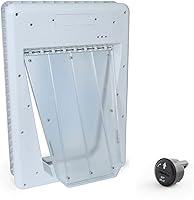
PetSafe Electronic Pet Door, Collar Key Large
8.0/10 our score
See it on Amazon -
2
 Best for flap-averse dogs
Power Pet DeadBolt Smart Pet Door, Large
7.9/10 our score
See it on Amazon -
3
 Best for medium-dog households
Power Pet PX-1 Electronic Pet Door, Medium
7.8/10 our score
See it on Amazon
- 4
 Check it
Power Pet High Security Electronic Pet Door
Best for large-dog door installations - 5
 Check it
Power Pet Wall Mount Electronic Pet Door, Large
Best for large-dog wall projects - 6
 Check it
Power Pet Wall Mount Electronic Pet Door, Medium
Best for medium-dog wall projects - 7
 Check it
PetSafe Electronic Pet Door, Collar Key Small
Best for small-pet households - 8
 Check it
Power Pet WiFi Roll Up Dog Door, Large
Best for scheduled pet access
How we chose these electronic dog doors
We compared pet fit, access controls, mounting requirements and power choices, with collar compatibility treated as a basic buying requirement. The order favors practical everyday access before extra controls that only some households need.
Several Power Pet options share core features, so they aren't 6 wholly different access systems. Their main buying differences are size, mounting package and, for the Roll Up, panel design and optional connected controls.
Compare like-for-like installation packages rather than treating every lower-ranked model as a worse choice. A medium wall model can be the right buy for your home even when a large door model scores higher.
| Product | Best for | Access | Mounting | Power | Our score |
|---|---|---|---|---|---|
| PetSafe Electronic Pet Door, Collar Key Large | multi-dog homes | Programmable entry, exit and auto-locking | Interior or exterior door; separate wall kit needed | Battery operated | 8.0 |
| Power Pet DeadBolt Smart Pet Door, Large | flap-averse dogs | In only, out only, in and out, or locked | Door mount included; separate wall kit needed | Included AC adapter; optional rechargeable backup battery | 7.9 |
| Power Pet PX-1 Electronic Pet Door, Medium | medium-dog households | In only, out only, in and out, or locked | Door mount included; separate wall kit needed | Included AC adapter; optional rechargeable backup battery | 7.8 |
| Power Pet High Security Electronic Pet Door | large-dog door installations | In only, out only, in and out, or locked | Door mount; maximum compatible thickness 2 in | Included AC adapter; optional rechargeable backup battery | 7.6 |
| Power Pet Wall Mount Electronic Pet Door, Large | large-dog wall projects | In only, out only, in and out, or locked | Wall mount with aluminum tunnel | Included AC adapter; optional rechargeable backup battery | 7.5 |
| Power Pet Wall Mount Electronic Pet Door, Medium | medium-dog wall projects | In only, out only, in and out, or locked | Wall mount with aluminum tunnel | Included AC adapter; optional rechargeable backup battery | 7.4 |
| PetSafe Electronic Pet Door, Collar Key Small | small-pet households | Programmable entry, exit and auto-locking | Interior or exterior door; separate wall kit needed | Battery operated | 7.2 |
| Power Pet WiFi Roll Up Dog Door, Large | scheduled pet access | Enter only, exit only, full access, or locked | Large door-mount model | 7.0 |
The best electronic dog doors for different households
Choose PetSafe for collar-key access or Power Pet for a motorized passage, then narrow the choice by pet size and mounting location. Each recommendation below includes a reason to buy and a reason to pass.
PetSafe Electronic Pet Door, Collar Key Large: Best for multi-dog homes
- Programmable entry, exit and auto-locking
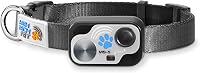
- Waterproof collar key
- Supports up to 5 keys
- Battery operated
Choose this large PetSafe for several dogs sharing collar-key access. Measure each dog against the opening before relying on the weight limit.
Pros
- Supports up to 5 keys
- Waterproof collar key
- No nearby outlet needed
Cons
- Needs battery checks and replacements
- Wall installation requires a separate kit
The large PetSafe is the starting point for homes where several dogs need the same entrance. It supports up to 5 collar keys, with programmable selective entry, exit and auto-locking.
Its waterproof key suits a collar that goes outside with your pet. The detection range adjusts up to 3 feet, so you can set recognition around the approach rather than choosing the longest range by default.
This model is intended for dogs up to 100 lb, but broad shoulders and a deep chest still need a physical fit check. Measure the largest dog and consider whether the smallest can manage the same step-over height.
Buy it when collar-key control meets your needs and battery operation suits the location. Skip it if your main goal is a panel that rises before your dog passes, since the Power Pet options address that need directly.
Power Pet DeadBolt Smart Pet Door, Large: Best for flap-averse dogs
- Motorized rising panel
- Directional approach sensing
- Automatic steel dead bolt
- Four access modes
A rising panel suits dogs that dislike pushing through a flap. This large non-WiFi model puts access controls on the door.
Pros
- Pet doesn't need to push a flap
- Separate inside and outside range controls
- Obstruction-triggered auto-retract
Cons
- Requires genuine MS-5 transmitters for performance warranty
- Backup battery and wall kit are optional extras
The large DeadBolt model suits a dog that hesitates to push through a flap. Its motorized panel rises, allowing you to teach the dog to approach, wait and walk through.
This non-WiFi model offers In Only, Out Only, In & Out, and Locked modes. Directional sensing is designed to respond to a direct approach rather than a dog resting nearby.
An automatic steel dead bolt secures the closed panel. High Tech Pet says its auto-retract system raises the panel if it detects an obstruction during closure, but leave room for an unhurried passage during training.
Choose it for motorized access controlled at the door, with the door mount included. Skip it if remote schedules are the reason you're upgrading, or if you cannot make a suitable power arrangement near the installation.
Power Pet PX-1 Electronic Pet Door, Medium: Best for medium-dog households
- Medium motorized model
- Directional sensing
- Automatic steel dead bolt
- Four access modes
Start with the PX-1 when your dog fits a medium opening and you want a motorized door. Confirm the clear passage size before ordering.
Pros
- Motorized passage without flap pushing
- Adjustable inside and outside sensing ranges
- Manual-open and hold-open controls
Cons
- Medium size name doesn't confirm pet fit
- Wall kit sold separately
The PX-1 is the medium door-mount choice for a household that wants a rising panel without moving straight to a large model. Choose it only after checking the clear passage dimensions, not the outside frame size.
Its inside and outside sensing ranges can be adjusted separately. That helps you account for different approaches, such as a short indoor path and a more open route from the yard.
Manual-open and hold-open controls can help introduce a hesitant dog to the passage. Follow the door's instructions and keep early sessions supervised rather than expecting the collar to teach the whole routine.
Skip the PX-1 if your dog's shoulders or normal walking posture call for more clearance. If a wall location makes more sense, compare the large wall-mount electronic dog door options and the medium wall package below before choosing a cutout.
Power Pet High Security Electronic Pet Door: Best for large-dog door installations
- For dogs 30–100 lb
- 12 1/4 x 16 in pet opening
- Aluminum frame
- Four access modes
The PX-2DM gives large-dog households a stated opening size for planning a door installation. Check both pet clearance and door thickness.
Pros
- Stated clear opening dimensions
- Automatic steel dead bolt
- Obstruction-triggered auto-retract
Cons
- Door thickness needs careful checking
- Wall kit sold separately
The PX-2DM suits large-dog households planning a door installation because it has a stated 12 1/4 x 16 in pet opening. It is intended for dogs from 30 to 100 lb, giving you both an opening measurement and a weight range to consider.
Make a cardboard opening of that size and let your dog approach it calmly. This can reveal an awkward shoulder fit before you commit to altering the house door.
Its aluminum frame and maximum compatible door thickness of 2 inches are useful installation checks. Measure the actual door, including any raised areas that could affect a flat mounting surface.
Choose it when those dimensions fit both pet and door. Skip it if the passage would require your dog to squeeze or crouch sharply, and use our dog door size chart to work through the measurements first.
Power Pet Wall Mount Electronic Pet Door, Large: Best for large-dog wall projects
- Large wall-mount model
- Aluminum wall tunnel included
- Directional sensing
- Automatic steel dead bolt
Choose this wall-mount package when a large passage belongs through the wall. Confirm tunnel depth and the clear opening before planning the cut.
Pros
- Wall tunnel included
- Motorized rising panel
- Obstruction-triggered auto-retract
Cons
- Wall construction needs advance planning
- Authentic MS-5 transmitters required for performance warranty
The large wall-mount Power Pet is the better starting package when the route belongs through a wall. An aluminum wall tunnel is included, so you aren't starting with a door-only package and adding a tunnel later.
A wall location can leave the main house door intact and place the pet route closer to the yard. It also creates a tunnel your dog must enter, so check the landing area and height on both sides.
Don't assume that an included tunnel suits every wall depth or finish. Confirm the tunnel's fit and the space needed for the interior unit before arranging the work.
Choose this version for a large dog whose measurements suit its passage. Skip it while the wall location remains uncertain, and compare installation options in our guide to dog doors for exterior doors.
Power Pet Wall Mount Electronic Pet Door, Medium: Best for medium-dog wall projects
- Medium wall-mount model
- Aluminum wall tunnel included
- Directional sensing
- Automatic steel dead bolt
This medium wall package suits dogs that fit its passage without needing the large version. Check the step-over height at both ends of the tunnel.
Pros
- Wall tunnel included
- Adjustable sensing ranges
- Manual-open and hold-open controls
Cons
- Pet fit requires opening measurements
- Wall installation is harder to reverse
The medium wall-mount Power Pet suits dogs that fit a medium passage and homes with a settled wall installation plan. It supplies the wall package without making a large opening the default choice.
Pay close attention to step-over height at both ends. A floor and patio at different levels can create an easy approach indoors but an awkward return from outside.
Allow room for the dog to stand straight in front of the entrance. Furniture, planters or a narrow corner can turn the approach into a sideways maneuver that works poorly with directional sensing.
Choose it when the medium opening leaves comfortable clearance for every intended user. Skip it if your dog is still growing or needs a larger passage, and use our wall mount versus door mount guide before committing to a permanent location.
PetSafe Electronic Pet Door, Collar Key Small: Best for small-pet households
- For cats and dogs 4–15 lb
- Programmable collar-key access
- Supports up to 5 keys
- Battery operated
Pick the small PetSafe when every pet using the door fits its opening. Its collar-key system supports several small pets without an outlet nearby.
Pros
- Waterproof collar key
- Supports up to 5 keys
- Interior or exterior door installation
Cons
- Unsuitable for pets that outgrow the opening
- Wall installation requires a separate kit
The small PetSafe suits cats and dogs in the 4–15 lb range that can comfortably wear its collar key. It makes more sense than a large opening when all pets needing access are small.
This can work for several small pets sharing a route, but plan around their behavior as well as their size. A pet without a key may follow an authorized pet through while the passage is open.
An interior installation can separate a pet area from another room, while an exterior installation creates an outdoor route. Decide what access you want to control before choosing the location.
Buy it when the small opening fits every intended pet and collar-key access is enough. Skip it for a growing dog likely to exceed the opening, and compare dog doors for large dogs if the household needs a larger shared entrance.
Power Pet WiFi Roll Up Dog Door, Large: Best for scheduled pet access
- Roll-up motorized panel
- Optional WiFi app control
- Weekly entry and exit schedules
- Safe Return setting
Choose the Roll Up for weekly schedules and optional remote access management. Its panel coils into the casing to suit tighter vertical spaces.
Pros
- Separate entry and exit schedules
- Safe Return allows inward access when enabled
- Additional security panel included
Cons
- App control is optional
- Uses genuine MS-5 collar transmitters
The WiFi Roll Up is the choice for households that need weekly entry and exit schedules or optional remote access management. Its app supports access controls and connections to Alexa, Google Home and Siri.
The panel rolls into a compartment in the casing. High Tech Pet designed this arrangement for tight vertical spaces, making it worth considering when a conventional rising-panel housing would be awkward.
Safe Return allows your pet to come inside when enabled. Use that setting deliberately, especially when an outward restriction starts while your dog may still be in the yard.
Choose it when the connected features solve a daily need; otherwise, start with the simpler controls above. Compare collar sensor door options and collar, microchip or app controls if you're unsure which kind of access system you want.
How to choose the best electronic dog door for your home
Choose by pet clearance, collar acceptance, mounting location and daily access rules, in that order. Extra controls are useful only after the door fits your dog and home.
Which electronic dog door fits your dog's body?
The clear opening must suit your dog's body width and height, with a step-over your dog can manage comfortably. A weight limit cannot tell you whether a broad-chested dog will pass easily.
Measure your dog standing naturally rather than stretched or crouched. Check where the bottom of the opening will sit, because a correctly sized passage can still be awkward when installed too high.
For several pets, plan around the widest and tallest while checking the shortest pet's ability to step through. Our dog door size chart helps turn those measurements into an installation plan.
If your main concern is a large breed, compare our large dog door picks before settling on an electronic model. Access control cannot compensate for a cramped passage.
Will every pet wear the required collar?
These PetSafe doors use an Electronic Pet Door Key, while the Power Pet models use genuine High Tech Pet MS-5 ultrasonic transmitters. High Tech Pet ties its performance warranty to authentic MS-5 transmitters.
Do not assume a door reads an implanted microchip just because it is electronic. A pet that cannot comfortably wear the required collar needs a different access plan.
For a closer explanation, read how a collar sensor dog door works. Choose the system before buying extra keys or transmitters, since they are not interchangeable.
Which direction should stay open?
Decide separately when your dog may leave and when it may return. Entry-only access can suit a time when you want pets back indoors without allowing another trip out.
Before switching to Locked, account for every pet. A setting that makes sense indoors can leave a dog outside if you change it without checking.
Collar recognition also does not create a separate physical barrier between pets traveling together. If one pet must remain indoors, supervise shared approaches rather than relying only on the absence of a key.
Where should the door go?
Choose a location with a clear approach, safe outdoor landing and practical access to the controls. Then check whether the correct package supports that surface and thickness.
The PetSafe models and the Power Pet DeadBolt, PX-1 and PX-2DM door-mount versions need separate wall kits. The 2 Power Pet wall-mount packages include tunnels, but tunnel depth still needs checking.
Our wall mount versus door mount comparison covers the location tradeoffs. Read how to install a dog door in a wall before planning work around wiring, pipes or structural parts.
What happens when power is unavailable?
Plan a manual access routine before depending on the door. Battery-operated access needs regular battery checks, while an AC-powered installation needs a suitable outlet and a safe cable route.
The conventional Power Pet models above include an AC adapter and offer an optional rechargeable backup battery. Confirm the Roll Up's power requirements separately rather than assuming every model in the family uses the same arrangement.
Keep your dog's needs in mind during an outage or depleted battery. Someone must still be able to let the dog in or out if automatic access is unavailable.
Do app controls solve a daily problem?
App controls are worth choosing when you need remote changes or recurring access schedules. If you expect to leave the same access mode in place most days, local controls may meet your needs.
Check what the optional WiFi setup requires before choosing the Roll Up for connected use. Our smart dog door guide explains how remote controls differ from the collar sensing that identifies a pet.
How should you set up and introduce an electronic dog door?
Set up the controls and teach one calm passage at a time before relying on independent access. Installation, collar recognition and training are separate jobs.
Prepare the opening before cutting
Use the exact model's template and instructions, and distinguish the cutout from the clear pet opening and outer frame. Mark the planned position on both sides, checking floor clearance and nearby obstacles.
For a wall, confirm the route is suitable before opening it. For a house door, check its construction and mounting surface rather than assuming any flat-looking panel will accept the unit.
Gather the correct kit, sealing materials and power equipment first. Discovering that a tunnel or adapter arrangement is missing after cutting leaves you with an unfinished opening.
Pair the collar and adjust the approach
Program each collar key or transmitter according to the instructions. Check recognition from both sides before asking the dog to pass, with other pets away from the entrance.
Start with a range suited to the approach rather than the maximum possible distance. You want the door ready for a pet coming through, without opening whenever that pet rests or walks nearby.
A bed, food bowl or favorite resting spot beside the sensor can complicate the setup. Move those items if they cause unwanted activation rather than immediately increasing the range.
Teach the sound and movement first
Let the dog watch the door operate from a comfortable distance, then reward a calm approach. Use an allowed hold-open or training setting when the instructions support it.
Keep sessions short and let the dog choose to move through. Never push or pull a dog into a moving passage, and keep fingers, paws and treats clear of the panel path.
Practice travel in both directions before leaving automatic access in use. Our dog door training guide gives a slower progression for dogs that hesitate.
How do you keep electronic access working reliably?
Keep the passage clear, collar system ready and daily settings deliberate. A brief routine can catch debris, weak power or an unintended access mode before your dog depends on the door.
Wipe dirt from the frame and accessible sensor areas as directed by the manufacturer. Keep panel tracks and the bottom landing free of grit, fur and objects that could interfere with closure.
Inspect collar attachments and check the transmitter's condition. PetSafe's key is waterproof, while the Power Pet MS-5 collar is described as water-resistant, so follow each brand's care instructions rather than treating them alike.
Review access settings after power changes, maintenance or a change in routine. Watch a complete entry and exit with your dog nearby before assuming the usual arrangement is restored.
High Tech Pet describes its closed panels as sealing against the weather, but the frame-to-house joint also needs proper sealing. If winter drafts drive your choice, compare dog doors for cold weather alongside the access features.
Which mistakes cause the most trouble?
The biggest mistakes are buying by weight alone, cutting too early and expecting electronics to manage every household rule. Resolve those issues before spending time on extra features.
- Confusing frame size with passage size: Measure the space your dog actually walks through, not the outside housing.
- Choosing range before location: A longer detection distance can cause unnecessary opening near a resting spot.
- Treating similar models as identical: Match the exact size, mounting package and instructions to your installation.
- Ignoring the outdoor landing: Check steps, slippery surfaces and the route beyond the door.
- Relying on a collar to separate close-following pets: Supervise if one animal must stay inside.
- Changing access without counting pets: Confirm everyone is on the intended side before restricting entry.
An electronic door also cannot make an unfenced or otherwise unsuitable outdoor space ready for independent use. Decide when your dog can safely use the route, then set the door to support that routine.
Which electronic dog door should you choose?
The best electronic dog door is the one that fits your pet and makes your daily access rules easier to follow. Use fit first, mounting second, controls third as your decision rule.
Choose the large PetSafe for a shared collar-key entrance, or the small PetSafe when every intended pet fits its smaller passage. Choose the large DeadBolt or medium PX-1 when your dog benefits from a motorized panel.
For a wall route, select the appropriate wall-mount package after checking passage size and tunnel fit. Choose the PX-2DM for a large-dog door project that matches its stated opening and thickness limits.
Choose the Roll Up when schedules, optional remote controls or its compact panel storage solve a specific need. If you're still deciding whether controlled access is worth the added upkeep, read electronic versus flap dog doors before making the cut.
Our top 3 picks at a glance
-
1
Best for multi-dog homes
PetSafe Electronic Pet Door, Collar Key Large
8.0/10 our score
See it on Amazon -
2
Best for flap-averse dogs
Power Pet DeadBolt Smart Pet Door, Large
7.9/10 our score
See it on Amazon -
3
Best for medium-dog households
Power Pet PX-1 Electronic Pet Door, Medium
7.8/10 our score
See it on Amazon
Frequently asked questions
How does an electronic dog door work?
An electronic dog door recognizes a collar key or transmitter and permits passage according to its access settings; PetSafe uses a collar key, while these Power Pet doors use genuine MS-5 ultrasonic transmitters. A controlled latch and a motorized panel work differently, so decide whether your dog should push through or wait for an opening.
Are electronic dog doors safer than flap doors?
Electronic dog doors add selective access, but home safety still depends on the opening, lock, installation and daily settings; a collar sensor cannot prevent another pet from following closely through an open passage. Read are dog doors safe and dog door security tips when planning the location and overnight routine.
Can an electronic dog door go in a wall?
Some electronic dog doors support wall installation with the correct tunnel or kit; these PetSafe models and the Power Pet DeadBolt, PX-1 and PX-2DM door-mount versions need separate wall kits. The 2 Power Pet wall-mount models include aluminum tunnels, but you still need to confirm wall depth and safe placement.
What should I measure before buying an electronic dog door?
Measure your dog's body width and shoulder height, then compare them with the clear passage and planned step-over height; check door or wall thickness separately, since outside frame dimensions aren't opening dimensions. Use the dog door size chart to plan comfortable clearance for every pet sharing the door.