How to Choose a Smart Dog Door
Choose a smart dog door with access rules that fit your pets: PetSafe for collar-key access, SureFlap for compatible microchip entry, or Power Pet for app controls and weekly schedules. Check exit restrictions, clear opening size, installation and power before buying.
On this page (7 sections)
- Which smart dog door access method fits your pet?
- Should a smart dog door control entry, exit or both?
- How do you measure your dog and plan the installation?
- How do power and maintenance affect the choice?
- How should you set up and teach your dog to use it?
- Which smart dog door mistakes should you avoid?
- Which smart dog door should you choose?
Choose a smart dog door by who should enter and exit, then match the sensor, opening and controls to your pet. PetSafe suits collar-key access, SureFlap suits compatible microchip entry, and Power Pet adds remote controls and weekly schedules through optional Wi-Fi.
Start with your household's rules: which pets may go outside, when they may return and whether anyone must stay indoors. A door can recognize your dog without supporting every restriction you need.
If you are still comparing basic designs, start with our dog door types and sizing guide. For a broader look at sensor models, see the best electronic dog doors.
Which smart dog door access method fits your pet?
Choose the access rules first and the sensor second. Collar keys, implanted microchips and app controls solve different parts of the access problem, and an app-connected door may still require a wearable transmitter.
| Access method | Who it suits | Main buying check |
|---|---|---|
| Collar key | Pets comfortable wearing a sensor | Key management and entry or exit settings |
| Implanted microchip | Small pets that fit the opening and have a compatible chip | Chip compatibility and entry-only recognition |
| App and collar transmitter | Households that need remote changes or weekly schedules | Transmitter, connection and power requirements |
Is a collar key smart dog door right for you?
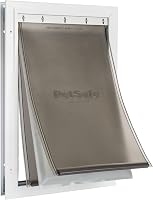
A collar-key smart dog door suits a pet that reliably wears its sensor. In automatic mode, the PetSafe Electronic Pet Door detects its waterproof key as the pet approaches and releases the lock.
The large PetSafe model is intended for dogs up to 100 lb. Choose it when a collar key fits your daily routine and you want access controls without making remote app management the main goal.
Skip it if your dog cannot comfortably wear a key or you need app-based scheduling. Also avoid choosing it from the weight limit alone: a tall, narrow dog and a broad dog of similar weight may need different openings.
The small model suits a small dog or cat household that wants the same collar-key approach. Skip it for a growing puppy likely to outgrow that range, or for a pet whose body measurements don't suit the opening.
Both sizes have an adjustable detection range up to 3 ft and lock automatically after passage. Start with a short practical range so a pet resting near the door doesn't trigger access sooner than you want.
For multiple pets, plan a key for each pet that needs access and decide where spare keys will live. A recognized key identifies an authorized pet, but don't assume it gives every pet a separate schedule.
Our guide to how a collar sensor dog door works explains the sensor approach in more detail.
Is a microchip dog door a better choice?
Choose microchip recognition to avoid a separate wearable key, provided your pet has a compatible implant and fits the opening. The SureFlap model is most useful when your main aim is controlling who comes inside.
SureFlap scans on entry only, and any animal can exit. Skip this model if an indoor-only pet can reach it, even when your other pets are allowed outside.
It works with 9-digit Avid Secure, 10-digit FDXA and 15-digit FDXB microchips. Ask your veterinarian, shelter or rescue organization for the chip number if you aren't sure what your pet has.
The clear flap opening is 6 11/16 in high by 7 in wide. That makes actual body measurements especially important for a small dog near the opening's limits.
SureFlap also supports RFID collar tags for pets without compatible implants. Its curfew feature sets timed locking and opening, but it doesn't turn entry-only recognition into selective exit control.
Choose it for a chip-compatible small pet when entry control is the priority. If you need to keep one household pet indoors while another leaves, choose a system whose exit rules explicitly support that arrangement.
When does an app-connected dog door make sense?
Choose app control when you need to change access away from home or set a weekly routine. If you only want the door to respond when your dog approaches, simpler sensor access may cover the job.
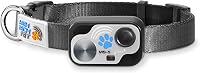
Power Pet uses genuine High Tech Pet MS-5 ultrasonic collar transmitters. Its modes are Enter Only, Exit Only, Full Access and Locked, giving you clear choices for managing travel in each direction.
The optional Wi-Fi app supports remote controls, weekly entry and exit schedules, and connections with Alexa, Google Home and Siri. Entry and exit activation distances adjust separately from a few inches to 20 ft.
This suits a household whose outdoor access changes through the week. Skip it if you don't want to manage a transmitter and connection setup, or if you won't use the remote features.
Its safe-return setting allows a pet back inside when enabled. High Tech Pet says its closure system raises the panel when it detects an obstacle, so include that behavior in your supervised setup checks.
The roll-up panel stores within its casing, a design intended for limited vertical space. High Tech Pet limits its door performance warranty to use with authentic MS-5 transmitters, so avoid choosing an unapproved replacement just because it appears similar.
Should a smart dog door control entry, exit or both?
Write separate rules for coming in and going out. “Recognizes my dog” isn't enough if you need to keep a cat indoors or stop outdoor trips after dark.
Use a simple household checklist before comparing controls:
- Which pets may leave without you?
- Which pets may return at any time?
- Should outdoor access change overnight?
- What should happen if a pet is still outside when a schedule changes?
Entry control helps reduce access by unrecognized animals. Exit control matters when a pet must stay inside, but a whole-door exit setting isn't necessarily a separate permission for each pet.
Ask specifically about individual pet permissions if your household needs them. Support for several keys or identities tells you how many pets can be recognized, not how many different access plans you can assign.
A schedule also needs a return plan. Check the yard and locate your pets before changing a mode that could leave one outside.
For a closer comparison of sensor doors and flap doors, read electronic vs. flap dog doors. Our guide to dog door security, locks and panels covers physical ways to manage the opening.
How do you measure your dog and plan the installation?
Buy for the clear passage and mounting location, rather than the frame size or the word “large.” Your dog needs room to pass without scraping its sides or making an awkward climb.
Measure your dog's widest body point and standing height, then use the chosen model's fitting instructions to set the opening and step-over height. Include every pet that will share the door, especially the smallest and least mobile.
A cardboard opening can help you judge the space before cutting. Keep it steady, let your dog approach willingly and use the exercise to spot a cramped width or an uncomfortable step.
For detailed sizing help, use our dog door size chart.
Match the door to the mounting surface
The PetSafe models fit interior or exterior doors; wall installation needs a separate Wall Install Kit. SureFlap can fit doors, windows or walls, with a mounting adaptor required for glass and possible adaptor and tunnel extenders for walls.
The Power Pet option here is a door-mount model with a maximum compatible thickness of 6 in. Don't treat that thickness limit as confirmation that every surface or cutout will work.
Measure usable flat space around the opening, including room for the casing and access to controls. Check that trim, door handles and nearby walls won't interfere when the main door swings.
Glass work needs the right installer and installation plan. Don't cut an existing pane as though it were a timber door.
If you are fitting an exterior wall or door, see dog doors for walls and exterior doors before planning the cutout.
Plan the route on both sides
Give your dog a clear, stable approach inside and outside. A narrow landing, slippery floor or obstacle directly beyond the opening can make a correctly sized door awkward to use.
Keep bedding away from the activation area of a collar-sensor model. A dog sleeping near the opening shouldn't be the reason the door keeps responding.
Check drainage and exposure outside before deciding on the location. Electronic access controls don't tell you how well the finished installation will handle wind or rain, so assess the frame, seals and surrounding cutout separately.
How do power and maintenance affect the choice?
Choose a power routine you can maintain and learn what happens when power fails. A door's sensor, lock and app are only useful when the parts they depend on are ready.
The PetSafe door units use 4 D-cell batteries, which aren't included. Treat the door's power needs and any collar-key battery needs as separate checks.
SureFlap uses 4 C non-rechargeable alkaline batteries, also not included. It has a flashing red low-battery indicator; SureFlap estimates up to 12 months of battery life depending on use.
Confirm the Power Pet model's power requirements before planning its location. Wi-Fi describes the connection feature, not how the door motor receives power.
Before relying on any model, learn whether a power failure leaves it locked, open or usable through another control. Also check how you can secure the opening while replacing batteries or dealing with a fault.
Keep these tasks in your routine:
- Check wearable keys and transmitters for secure attachment.
- Look for low-battery warnings before leaving home.
- Remove hair and dirt from the passage and moving edges.
- Inspect seals and mounting screws for wear or movement.
- Follow the care instructions around sensors and electrical parts.
A waterproof collar key doesn't mean every part of the door can be washed the same way. Use the model's cleaning instructions rather than spraying the whole assembly.
Keep replacement batteries and any spare wearable sensor where another caregiver can find them. A short note with the normal access mode also helps prevent accidental changes.
How should you set up and teach your dog to use it?
Introduce the movement and sound gradually, with outdoor access supervised at first. A sensor recognizing your dog doesn't mean your dog understands the opening.
Program the pets that need access and check recognition before allowing free use. For a multi-pet home, check each pet separately so a successful pass by one doesn't hide a setup problem for another.
Start with a short activation distance where adjustment is available. Approach from both sides, watch when the door responds and increase the range only if your dog needs more time.
Teach passage in small steps:
- Let your dog inspect the opening without pressure.
- Reward calm approaches and interest near the passage.
- Follow the instructions for a suitable training position or mode.
- Encourage short passes with a reward on the other side.
- Add normal sensor operation once your dog is comfortable.
Never push or pull a reluctant dog through. If your dog backs away from the moving panel or lock sound, shorten the session and return to an easier step.
Our guide to training a dog to use a dog door explains how to build confidence without rushing.
For app setup, check the connection at the installed location before depending on remote changes. Save a simple schedule first and confirm the actual entry and exit behavior while you're home.
Which smart dog door mistakes should you avoid?
Avoid buying extra controls before confirming fit and access direction. The most useful feature is the one that solves your household's actual problem.
Confusing recognized entry with indoor containment
A door that rejects an unfamiliar animal on entry may still let that animal leave. This matters most when a cat or another small pet must stay indoors.
Check how the door behaves in both directions with each permitted mode. Don't infer exit rules from words such as “selective” or “microchip.”
Setting the detection range too wide
A long activation range can respond while your dog is merely passing nearby. Begin with the shortest range that allows a calm approach, then adjust for the actual route your dog takes.
Watch both sides of the opening. Furniture placement and outdoor resting spots can affect where your dog spends time near the sensor.
Treating the door as a complete security system
Selective access helps manage pets, but it doesn't replace a secure yard, a sound exterior door or supervision. Another animal may follow closely while the passage is open.
Read whether dog doors let other animals in if unwanted visitors are your main concern. Choose physical closure options as carefully as the recognition method.
Buying accessories after cutting the opening
Plan the frame, tunnel, mounting adaptor and power arrangement before any cut. An accessory requirement can change the installation depth or the amount of usable space.
Keep the cutout template and fitting instructions for the exact model together. Similar-looking doors can need different openings.
Which smart dog door should you choose?
Choose the simplest smart dog door that meets your fit and access rules. Decide what must happen on an ordinary day, overnight and during a power or connection problem.
Pick the large PetSafe for a dog that fits its opening and can wear a key. Choose the small PetSafe for a smaller pet when you want the same collar-key approach without sizing up unnecessarily.
Pick SureFlap when compatible microchip entry is the main goal and every pet that can reach the door may leave. Skip it if selective exit is essential.
Pick Power Pet when remote changes, weekly schedules and a powered roll-up panel solve a real daily need. Allow time to set up the transmitter, access modes and connection before giving your dog unsupervised use.
Before ordering, settle 3 things: your dog's clear opening needs, the required entry and exit behavior, and the complete installation plan.
Then use our PetSafe vs. SureFlap comparison if wearable keys versus implanted-chip access is your remaining choice.
Frequently asked questions
Is a collar key or microchip dog door better?
A collar key suits a pet that wears a collar and a household that wants the PetSafe models' programmable entry and exit options; a compatible implanted microchip removes the need for a separate key with SureFlap. Choose by access direction first, because this SureFlap model recognizes pets on entry only.
Can a microchip dog door keep other animals out?
A microchip door can restrict entry to recognized pets, which helps reduce access by unwanted animals; it isn't a complete barrier against an animal following your pet through an open flap. SureFlap scans on entry only, so any animal can exit, including a household pet you want to keep indoors.
Does an app dog door need Wi-Fi?
The Power Pet model uses its optional Wi-Fi feature for remote app controls and weekly entry and exit schedules. Before buying, confirm the connection requirements, any app costs and which local controls work during an internet outage; plan for a lost connection rather than relying on remote access for every trip.
What should I measure before buying an electronic dog door?
Measure your pet's widest body point and standing height, then compare them with the clear opening and the model's fitting instructions; measure the mounting surface's thickness and available space around the cutout too. Outside frame dimensions and a weight limit alone won't tell you whether your dog can pass comfortably.