PetSafe Electronic Pet Door Review (Large): Worth It?, November 2026
The PetSafe electronic dog door Large suits dogs that fit its opening and households that want collar-key access. Choose it if your pets can reliably wear their keys and you're comfortable managing batteries; measure the opening before buying.
On this page (9 sections)
- What does the PetSafe electronic dog door offer?
- How do the collar key and access settings work?
- What should you know about batteries?
- Where should you install the PetSafe door?
- How does the small PetSafe version compare?
- How does it compare with the Power Pet PX-1?
- How should you introduce your dog to the door?
- What care and buying mistakes matter most?
- Which PetSafe electronic dog door should you choose?
The PetSafe electronic dog door Large is a good choice for dogs that fit its opening and households that want access controlled by collar keys. It suits people who can keep those keys on their pets and make battery care part of the routine.
Choose it for selective access, rather than simply because your dog falls below the stated weight limit. Fit, a suitable installation spot and your dog's willingness to use the passage matter more than the word “Large.”
What does the PetSafe electronic dog door offer?
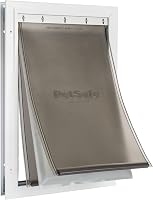
The PetSafe electronic dog door offers programmable entry, exit and automatic locking, with capacity for up to 5 Electronic Pet Door Keys. That makes it useful for several pets that need access through the same opening.
PetSafe Electronic Pet Door, Collar Key Large: Best for multi-dog homes

- For dogs up to 100 lb
- Programmable entry, exit and auto-lock options
- Supports up to 5 collar keys
- Battery operated
Choose the large PetSafe for collar-wearing dogs that need controlled access through a door. Its key capacity suits several pets, provided each one fits the opening.
Pros
- Supports up to 5 Electronic Pet Door Keys
- Programmable entry, exit and auto-lock options
- Waterproof collar key
- Works in interior or exterior doors
Cons
- Battery requirements need confirmation with PetSafe
- Wall installation needs a separate kit
- Selective access requires your pet to wear its key
The large model earns its score of 8 out of 10 for combining collar-key controls with door installation and an optional wall installation route. The main buying checks are physical fit, battery requirements and whether every intended user can reliably wear a key.
This is a strong match for a household that wants to reduce unrestricted movement through a pet opening. It won't make an unsuitable yard safe or let you ignore which pets are near the door.
If you're still choosing between a basic flap and electronic access, start with our guide to the best dog doors. Paying for selective access makes sense when controlling passage solves a real household need.
Does the large PetSafe electronic dog door fit your dog?
The large version is intended for dogs up to 100 lb, but your dog's shape determines whether the opening works. A broad chest, tall shoulders or limited mobility can change the fit even below that limit.
Measure your dog while standing naturally, including the widest part of the body and shoulder height. Then check the usable passage and proposed step-over height, rather than matching your dog to the outside frame.
The unit's overall dimensions are 8.6 x 3.25 x 27.1 inches. These are not the flap opening or the installation cutout.
Use the dog door size chart to plan those measurements. A cardboard outline of the usable opening can help you judge clearance before making a permanent cut.
For a home with several pets, measure both the largest and the smallest. The largest needs enough clearance, while the smallest must manage the step without an awkward climb.
How do the collar key and access settings work?
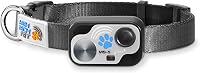
The door detects a waterproof Electronic Pet Door Key on your pet's collar and releases the lock in automatic mode. Detection range is adjustable up to 3 feet, and the door locks again after passage.
Choose the allowed entry and exit settings around your household's routine. Read the instructions carefully before assuming that a setting keeps one pet indoors while another goes out.
The key count describes programming capacity, not the number included. Work out how many pets need access and confirm the box contents before ordering extra keys.
Start with a detection range that gives your dog time to approach and pass comfortably. Watch what happens when a keyed pet rests or walks nearby, then adjust within PetSafe's instructions if the response doesn't suit the location.
See how a collar sensor dog door works for more on the link between collar position and access. A lost key or a collar removed for grooming can leave a pet without its usual route.
Selective access also has a physical limit: another animal may follow closely behind an allowed pet. Supervise early use, especially if keeping a particular pet indoors is essential.
What should you know about batteries?
The large PetSafe door is battery operated, so its location doesn't depend on a nearby outlet. Confirm its battery requirements with PetSafe before buying supplies because the battery information conflicts.
PetSafe describes the door as using 4 D-cell batteries that aren't included, while another battery specification differs. Ask PetSafe about model PPA11-10709 to settle the requirement.
Keep access to the battery compartment clear when choosing the installation spot. A door that fits behind furniture can still be awkward to maintain.
Follow the manual for replacement and check operation afterward with your pet supervised. Make sure someone else in the household knows how to manage the door if the batteries need attention while you're away.
Don't assume a power interruption leaves the passage in the state you want. Learn the model's instructions for loss of power before your dog depends on it for returning indoors.
Where should you install the PetSafe door?
Choose a location with a clear, comfortable approach on both sides and a suitable door or wall. The PetSafe model is designed for interior or exterior doors; wall installation requires a separate Wall Install Kit.
Look beyond the flat space needed for the frame. Check the door's full swing, nearby steps, furniture, outdoor obstacles and the area where your dog will pause before passing through.
For a wall, confirm construction and kit compatibility before making an opening. Hidden wiring, plumbing and structural parts call for a qualified installer when their positions are uncertain.
Compare the trade-offs in our guide to wall mount vs door mount dog doors. A wall route may suit the room better, but its tunnel and sealing need planning.
Use the correct template and cutout instructions for the exact model. An existing pet-door hole isn't proof of compatibility, even if its outside frame looks similar.
At an exterior opening, follow the installation directions for weather sealing. Electronic access controls movement; it doesn't by itself tell you how well an installation will handle drafts or rain.
How does the small PetSafe version compare?
Choose the small PetSafe for cats and dogs weighing 4–15 lb that fit its opening comfortably. It uses the same collar-key approach and programmable access options, so there's no reason to choose a larger frame solely for those controls.
The small version suits a household where every pet needing passage is small enough for it. Skip it if a larger dog must share the opening or if a young pet is likely to outgrow its usable space.
A smaller opening also needs careful placement. For a short-legged pet, an overly high step can matter as much as the width of the passage.
Both PetSafe sizes require their intended collar key and routine power care. Choose between them by body measurements and installation needs, rather than treating the large version's higher score as a reason to oversize.
How does it compare with the Power Pet PX-1?
Choose the Power Pet PX-1 if you want a motorized panel and an included AC adapter. Its ultrasonic MS-5 collar system differs from PetSafe's key system, so plan for the collars your chosen door requires.
The PX-1 offers In Only, Out Only, In & Out and Locked modes. High Tech Pet's directional sensing is designed to respond to a direct approach rather than a pet wandering or resting nearby.
It includes an MS-5 collar and door mount, while a wall kit and rechargeable backup battery are separate options. For an AC setup, plan a suitable outlet and a cord route away from chewing and foot traffic.
High Tech Pet describes an automatic steel deadbolt and an auto-retract feature that reopens the panel if it detects an obstruction. Keep the travel area clear and supervise learning rather than relying on that feature to manage crowding.
Use genuine MS-5 transmitters; High Tech Pet makes them a condition of its door performance warranty. Skip this option if you want to keep using PetSafe keys or don't want to manage a motorized door's power setup.
“Medium” doesn't mean it fits your dog. Check its usable opening before choosing it over either PetSafe size, and compare other designs in Best Electronic Dog Doors.
How should you introduce your dog to the door?
Teach the passage in short, calm sessions, with the door secured in a training position permitted by its instructions. Let your dog approach willingly before asking for a full trip through.
Start by rewarding calm interest near the opening. Have someone on the other side encourage passage, and never push a hesitant dog through or force its head toward moving parts.
Once your dog is comfortable with the opening, introduce normal operation gradually. Watch the approach, collar-key response and return trip, since confidence in one direction doesn't guarantee confidence in the other.
Use our guide to training a dog to use a dog door if your pet pauses or backs away. Keep another route available while learning is still uncertain.
In a multi-pet home, teach one animal at a time before allowing shared use. This makes it easier to see which pet needs help and reduces crowding at the opening.
What care and buying mistakes matter most?
Keep the passage, frame and locking area clear, and follow the manual's cleaning instructions. Mud, hair and debris around moving parts deserve attention before they interfere with normal use.
Wipe the collar key as directed and check that it remains securely attached. Waterproof describes the key, so don't assume it permits soaking or hosing the whole door assembly.
Avoid these common mistakes:
- Choosing by weight alone. Compare body measurements with the usable opening.
- Cutting from overall dimensions. Use the model's installation template and required cutout.
- Assuming every pet is allowed. Check programming and the selected access setting with each intended user.
- Expecting an empty opening to be animal-proof. Watch for pets following one another closely.
- Leaving power care to chance. Keep the correct supplies available and learn the power-loss procedure.
- Removing the collar without a plan. Give your pet another way back indoors when its key is off.
Recheck operation after cleaning, changing batteries or changing settings. Watch a complete exit and return before leaving your dog to use the door independently.
Which PetSafe electronic dog door should you choose?
Choose the large PetSafe electronic dog door when your dog fits comfortably, wears a key reliably and needs controlled access. Its capacity for several keys makes it a useful choice when multiple dogs share one passage.
Choose the small PetSafe when every intended pet fits its smaller opening and falls within the stated size range. Choose the PX-1 when a motorized panel, directional sensing and AC power better suit your installation.
Skip all 3 if you can't provide a suitable opening, a safe area outside or reliable collar use. Solve those conditions before cutting into your home.
If your remaining decision is about access technology, read our PetSafe vs SureFlap comparison. If you're still weighing the value of electronic control itself, use our guide to electronic dog door options before committing to an installation.
Frequently asked questions
How does the PetSafe Electronic Pet Door work?
The PetSafe Electronic Pet Door detects a programmed collar key and releases its lock when the pet approaches; its detection range is adjustable up to 3 feet, and it locks automatically after passage. Your pet must wear the key to use selective access, and you can program entry and exit settings.
How many pets can use the PetSafe electronic dog door?
The PetSafe electronic dog door supports up to 5 programmed Electronic Pet Door Keys; each pet that needs selective access must wear a key, and every pet must fit the opening comfortably. Key capacity doesn't tell you how many keys come in the box, so check that before ordering extras.
Does the large PetSafe Electronic Pet Door include batteries?
Confirm the battery requirements and inclusion with PetSafe before buying; PetSafe describes the door as using 4 D-cell batteries that aren't included, but the battery specifications conflict with that description. Ask about model PPA11-10709 so you have the right power supplies ready for installation.
Can the PetSafe Electronic Pet Door be installed in a wall?
Yes, the PetSafe Electronic Pet Door has a wall installation option with a separate Wall Install Kit; check that the kit suits your wall construction and thickness before cutting. Plan the opening height, clear passage and weather sealing, and use a qualified installer when the wall's structure or services are uncertain.