PetSafe Extreme Weather Dog Door Review: Worth It? (November 2026)
The PetSafe Extreme Weather Dog Door in aluminum, Large, suits busy pet households that want an insulated exterior-door opening. Choose it if your door is 1.5–2 in thick and you prefer a reinforced metal frame with a slide-in closing panel.
On this page (12 sections)
- What stands out about the PetSafe Extreme Weather Dog Door?
- How much weather protection should you expect?
- How do you check whether the opening fits your dog?
- Does your exterior door support the installation?
- When is the plastic PetSafe version the better choice?
- When should you consider Baboni or Petoasis instead?
- How should you introduce your dog to several flaps?
- What security limits come with a manual flap door?
- What care keeps the flaps working properly?
- Which buying mistakes should you avoid?
- Should you choose the PetSafe Extreme Weather Dog Door?
- Sources
The PetSafe Extreme Weather Dog Door in aluminum, Large, is a good choice for busy pet households that want an insulated opening through an exterior door. Its main appeal is the combination of adjustable flaps, a reinforced frame and a panel you can slide into place to stop access.
Choose it only after checking your dog's measurements and the installation surface. A weather-focused door still needs a comfortable pet opening, a sound frame fit and flaps that close after each trip.
What stands out about the PetSafe Extreme Weather Dog Door?
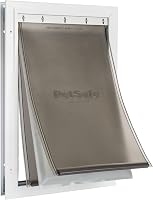
The aluminum model pairs 3 adjustable, flexible flaps with a magnetic seal and reinforced aluminum corners. PetSafe says it is built for multi-pet households, making it a sensible choice when several pets will share one exit.
PetSafe Extreme Weather Aluminum Dog Door, Large: Best for busy pet households

- Three adjustable flaps
- Magnetic seal
- Reinforced aluminum corners
- Slide-in closing panel
Choose this insulated metal-frame model for frequent pet traffic through a compatible exterior door. Its slide-in panel lets you close access when outdoor trips need supervision.
Pros
- Three insulating flaps
- Magnetic seal
- Reinforced aluminum corners
- Slide-in closing panel
Cons
- Fits a narrower door thickness range than the plastic PetSafe version
- Requires a permanent door cutout
The practical benefit is controlled independence: your dog can take outdoor breaks without someone opening the main door each time. The slide-in closing panel lets you stop those trips when you need to supervise the yard or keep pets indoors.
For a shared doorway, size the opening for the largest pet and check that the smallest can push through comfortably. More flap layers can require a slower introduction for a cautious animal.
Who should choose the large PetSafe Extreme Weather Dog Door?
Choose this version if you want a metal frame for frequent use and can make a permanent cutout in a suitable exterior door. It makes the most sense where pets have access to a secure outdoor area.
Skip it if you need automatic pet identification, can't alter the door or need a wall installation. Our guide to dog doors for walls and exterior doors helps separate those installation choices.
If you're still deciding between a flap door, an electronic model and other formats, start with our guide to dog door types.
How much weather protection should you expect?
Expect help limiting heat transfer and drafts, rather than the same barrier as an uncut exterior door. PetSafe says the aluminum model blocks 3 times more thermal energy than a standard pet door.
That comparison isn't a forecast for your utility bill. The size of the opening, exposure to wind and frequency of use all affect how much outdoor air reaches the room.
A sheltered entry is generally easier to manage than one facing strong prevailing winds. Watch where rain collects outside, too, since water pooling at the threshold is a separate problem from air moving through the flaps.
For winter-focused comparisons, see our guide to dog doors for cold weather. Compare installation fit and closure design before choosing by frame material alone.
Where can drafts still get through?
Drafts can enter around the frame or through flaps that don't settle closed. Check both areas before deciding that you need a different pet door.
Clear dirt or hair from the flap edges and make sure nothing catches as they swing. If you feel air around the frame itself, review the installation and sealing instructions rather than adjusting the flaps to solve the wrong problem.
How do you check whether the opening fits your dog?
Use your dog's body measurements, not the word “Large,” to choose the opening. A breed label or weight limit can't show whether a broad chest or tall back will clear the flaps.
With your dog standing naturally, measure the widest part of the chest or body. Compare that width and the needed passage height with the usable opening, allowing comfortable clearance.
Also consider the step over the bottom edge. A high opening may clear a dog's back but create an awkward climb for a smaller or less mobile pet.
Our dog door size guide explains the measurements to take. Confirm the aluminum model's opening dimensions before ordering, since the outer frame size doesn't tell you how much room your dog has.
What changes in a multi-pet household?
The opening must fit every pet that will use it, with an approach each can manage. Leave clear space on both sides so one animal doesn't block another halfway through.
A narrow indoor passage, nearby furniture or a steep outdoor step can make a correctly sized opening difficult to use. Check the whole route, including the landing area outside.
Does your exterior door support the installation?
The aluminum PetSafe fits compatible exterior doors 1.5–2 in thick, including paneled, wood, PVC and metal doors. Measure the intended installation area and check that the frame can sit correctly on both sides.
Raised panels and molding can complicate placement even when the thickness is within range. Door material alone also doesn't tell you whether a particular cut location is suitable.
The included template, frames and hardware support DIY installation. Read the full instructions before cutting, especially for a metal door or a door with unfamiliar internal construction.
If you rent, settle permission and replacement responsibilities first. Our guide to dog doors for renters covers choices for homes where a permanent opening isn't practical.
What should you check before making the cutout?
Check the template position, frame clearance and panel access before picking up a cutting tool. The closing panel needs enough room to slide fully into and out of place.
- Check both faces for hinges, locks, handles, trim and other obstructions.
- Swing the main door through its full travel to check nearby walls and furniture.
- Confirm that the pet has a level, clear approach indoors and outside.
- Follow the template's cut line, keeping it distinct from the frame outline.
- For a replacement, compare the existing hole with the new door's required cutout.
Don't enlarge an old opening until you've checked how the new frame will attach. If the existing hole is already too large, a different model or a repair may be needed.
When is the plastic PetSafe version the better choice?
Choose the plastic version when a color-matched frame or a thicker compatible door matters more than having metal corners. Its paintable frame fits doors 1 5/8–2 1/4 in thick.
PetSafe Extreme Weather Plastic Dog Door, 3-Flap Large: Best for matching door colors

- Three flaps
- Insulated center flap
- Paintable plastic frame
- Snap-on closing panel
Choose the plastic PetSafe version when matching your door's color matters or your door exceeds the aluminum model's thickness limit. It uses a snap-on panel to block pet access.
Pros
- Insulated center flap
- Paintable frame
- Fits doors up to 2 1/4 in thick
- Snap-on closing panel
Cons
- Doesn't suit buyers who specifically want a metal frame
- Second closing panel is sold separately
It includes an insulated center flap and a snap-on closing panel. PetSafe also allows a second closing panel, sold separately, for another layer of weather protection while access is closed.
This is the more suitable PetSafe option for a door slightly beyond the aluminum version's upper thickness limit. It also suits an entry where a white frame would stand out and you want to paint it to match.
Skip it if a metal frame is a firm requirement. Follow PetSafe's painting directions and keep paint away from moving parts and sealing surfaces.
When should you consider Baboni or Petoasis instead?
Consider Baboni for a thinner door and Petoasis for a thicker door project. Neither alternative removes the need to measure your pet, the cutout and the space around the frame.
Baboni Metal 3-Flap Dog Door, Large: Best for thinner exterior doors

- Insulated middle flap
- Magnetic outer flaps
- Telescoping tunnel
- Metal closing panel
A useful alternative when your door is too thin for the PetSafe aluminum model. Check both the pet opening and the larger installation cutout before choosing it.
Pros
- Accommodates doors down to 1 3/8 in thick
- Telescoping tunnel
- Insulated middle flap
- Includes a metal closing panel
Cons
- Upper thickness limit is just under 2 in
- Frame and cutout need separate clearance checks
Baboni fits doors 1 3/8–1 31/32 in thick, so it can suit an entry below the PetSafe aluminum model's minimum. Its telescoping tunnel bridges the supported door thickness.
The flap opening is 10 1/4 x 16 1/4 in, while the cutout is 11 1/8 x 17 1/2 in. The outer frame measures 14 1/4 x 21 1/16 in, which matters near raised panels or closely spaced hardware.
Its insulated middle flap sits between 2 vinyl flaps with magnetic closure, and a metal closing panel is included. Skip Baboni if your dog's measurements leave little clearance or your door exceeds its upper thickness limit.
Petoasis 3-Flap Heavy-Duty Dog Door: Best for thicker door projects

- Three removable flaps
- Aluminum alloy frame
- Maximum compatible thickness of 2.4 in
- Two locking panels
Consider Petoasis for a thicker door that rules out the PetSafe models. Confirm the minimum thickness, opening and cutout dimensions before committing to the installation.
Pros
- Accommodates a maximum thickness of 2.4 in
- Flaps can be removed separately
- Two locking panels
- Petoasis offers one damaged-flap replacement service
Cons
- Minimum compatible thickness needs confirmation
- Opening and cutout dimensions need confirmation
Petoasis has an aluminum alloy frame and supports a maximum thickness of 2.4 in. Confirm the minimum thickness and exact opening and cutout dimensions before choosing it for your project.
Its 3 flaps can be removed separately, which may help introduce a hesitant pet gradually; follow the instructions before changing the arrangement. Removing layers also reduces the barriers between indoor and outdoor air.
The 2 locking panels suit buyers who want that closure arrangement. If restricting which animal can enter is your priority, compare an electronic dog door instead.
How should you introduce your dog to several flaps?
Start with short, supervised practice sessions and reward calm movement through the opening. Let your dog investigate from both sides before expecting independent trips.
Use only a flap-holding or removal method allowed by the instructions. Gradually introduce the normal flap arrangement so your dog learns the feel of pushing through it.
Don't push or pull your dog through a tight opening. If the dog catches a shoulder, scrapes its back or struggles with the step, recheck the fit before continuing.
Practice traveling both out and back in, then confirm that the flaps settle after passage. Our guide to training a dog to use a dog door covers a gradual approach.
What security limits come with a manual flap door?
A manual flap door allows passage without identifying the animal using it. The closing panel blocks the opening when fitted, but an open flap isn't selective access.
Use a routine for closing access overnight or whenever outdoor trips need to stop. Make sure everyone in the household knows whether the panel is in place before letting a pet approach.
Consider the opening's distance from nearby locks and keep the surrounding exterior door secure. Our dog door security guide covers panels and placement, while our dog door safety guide explains broader household considerations.
What care keeps the flaps working properly?
Keep flap edges, sealing areas and panel channels clean, following PetSafe's care instructions. Dirt, fur and yard debris can interfere with closure even when the frame remains firmly attached.
Check operation after muddy weather or frequent use. Look for flaps that catch, visible damage, loose hardware or a closing panel that no longer seats fully.
If a flap stops returning to position, check for an obstruction or alignment issue before tightening screws. Uneven pressure on a frame can interfere with moving parts, so follow the installation directions for adjustments.
PetSafe backs the aluminum model with a 1-year US warranty and offers customer care Monday through Saturday. Ask about compatible replacement parts rather than assuming another PetSafe flap will fit this model.
Which buying mistakes should you avoid?
Avoid choosing by frame material before checking fit. A preferred metal frame is no help if the door is too thick or the dog has to squeeze through.
Another mistake is treating a flap opening, a cutout and an outer frame as interchangeable measurements. Each answers a different question: pet clearance, hole size and installation space.
Don't buy an insulated model expecting unrestricted access and a fully sealed doorway at the same time. Use the closing panel when access isn't needed, and check that the flaps close after normal trips.
Finally, don't assume a door-mounted model includes what you need for a wall. Wall depth, tunnel construction and weather sealing require a suitable installation plan.
Should you choose the PetSafe Extreme Weather Dog Door?
Choose the PetSafe Extreme Weather Dog Door in aluminum for frequent pet traffic when its opening and door thickness range fit your home. Choose the plastic PetSafe for a paintable finish or a door beyond the aluminum model's thickness limit.
Pick Baboni when a thinner door and its measured opening suit the job. Consider Petoasis for a thicker installation only after confirming its remaining fit dimensions.
Before ordering, write down your pet measurements, door thickness and available frame space. If your main question is how much insulation will help your home, read how insulated dog doors work in winter next.
Sources
PetSafe's product and support resources cover the aluminum model and provide access to installation and customer-care guidance.
Frequently asked questions
Is the PetSafe Extreme Weather dog door insulated?
Yes. The aluminum model uses 3 insulating, adjustable flaps with a magnetic seal.
PetSafe says it blocks 3 times more thermal energy than a standard pet door.
That comparison doesn't predict your energy savings, which depend on the installation, weather exposure and how often pets use the opening.
What door thickness fits the PetSafe aluminum dog door?
The aluminum model fits exterior doors 1.5–2 in thick, including compatible paneled, wood, PVC and metal doors. Measure at the intended cutout rather than assuming the whole door has the same thickness.
Check that both frame faces can sit correctly without interference from raised trim or nearby hardware.
Can you close the PetSafe Extreme Weather dog door?
Yes. The included slide-in closing panel blocks your pet's access when fitted correctly.
Use it when outdoor access needs to stop, and check that it is fully seated before leaving the area.
The panel closes the pet opening but doesn't replace the locks and other security measures on your exterior door.
Is the aluminum model different from the PetSafe plastic version?
Yes. The aluminum model has reinforced metal corners and a slide-in panel, while the plastic version has a paintable frame and snap-on panel.
Their door thickness ranges also differ.
Choose by installation fit first, then decide whether a metal frame or a color-matched finish matters more to you.